Imagine you’ve just spent $800 on a pair of sleek, top-of-the-line over-the-counter (OTC) hearing aids for your father. You’re excited to finally have a conversation without shouting. But after a week of “adjusting” them through a smartphone app, he still can’t hear a word you say. In fact, he mentions that his left ear feels “full” and he’s started feeling a bit dizzy.
In the rush to save money and skip the doctor’s office, many families are finding that what looked like a bargain was actually the wrong solution for their specific medical needs. Right now, the market is flooded with choices, but the most important question isn’t “Which one is best?” but rather, “Who should not use OTC hearing aids?”
Understanding the boundaries of this new technology is vital. While OTC devices are a triumph for accessibility, they are not a “one size fits all” cure. If you are a senior or a caregiver, knowing when to put the credit card away and call an audiologist can save you from wasted money and, more importantly, from missing a serious health concern.
The Power Limit: Are OTC Hearing Aids Safe for Severe Hearing Loss?
The most common mistake seniors make is assuming that a hearing aid is just a “volume knob” for the world. If you have significant trouble hearing even loud sounds, you might wonder: Are OTC hearing aids safe for severe hearing loss?
The short answer is: No. The FDA specifically designed OTC hearing aids for adults with “perceived mild-to-moderate hearing loss.” If your hearing loss has progressed to the “severe” or “profound” stage, these devices simply do not have the amplification power to help you. Using them in this state is like trying to use a magnifying glass to read when you actually need a high-power telescope.
When we ask are OTC hearing aids safe for severe hearing loss, we must consider the risk of “over-amplification.” If you try to force a mild-gain device to work for a severe loss, you may end up turning it up so loud that you distort the sound, making speech even harder to understand and potentially damaging the hearing you have left.
If you find that you cannot hear a telephone ringer in the next room or struggle to follow a conversation even in a completely quiet room, these are signs that you need a prescription hearing aid. For a deeper dive into the technical differences, see our guide on OTC vs Prescription Hearing Aids: Which Is Better for You?
The “Red Flags”: Who Should NOT Use OTC Hearing Aids?
The FDA has identified specific “medical red flags” that serve as a clear warning. If you check any of the following boxes, the answer to “who should not use otc hearing aids” is definitely you.
1. Sudden or Fluctuating Hearing Loss
If your hearing disappeared overnight, or if it seems to “come and go,” do not buy an OTC device. This could be a sign of a viral infection, a blood flow issue, or an autoimmune condition that needs immediate medical treatment, not just amplification.
2. One-Sided (Asymmetrical) Hearing Loss
If one ear hears significantly better than the other, this is a major warning sign. Asymmetrical hearing loss can sometimes be caused by a benign growth on the hearing nerve called an acoustic neuroma. An OTC aid will mask the symptom while the underlying cause goes untreated.
3. Dizziness or Vertigo
If your hearing loss is accompanied by a feeling of spinning, swaying, or loss of balance, you are firmly in the category of those who should not use OTC hearing aids. These symptoms often point to inner-ear disorders like Meniere’s disease, which requires a specialized medical plan.
4. Physical Ear Issues (Pain, Drainage, or Deformity)
- Active Drainage: If you have fluid, pus, or blood coming from your ear, you likely have an infection or a perforated eardrum.
- Pain: Hearing loss should not be painful.
- Deformity: If the shape of your ear has changed due to injury or a birth defect, an OTC “earbud” style device likely won’t fit or function correctly.
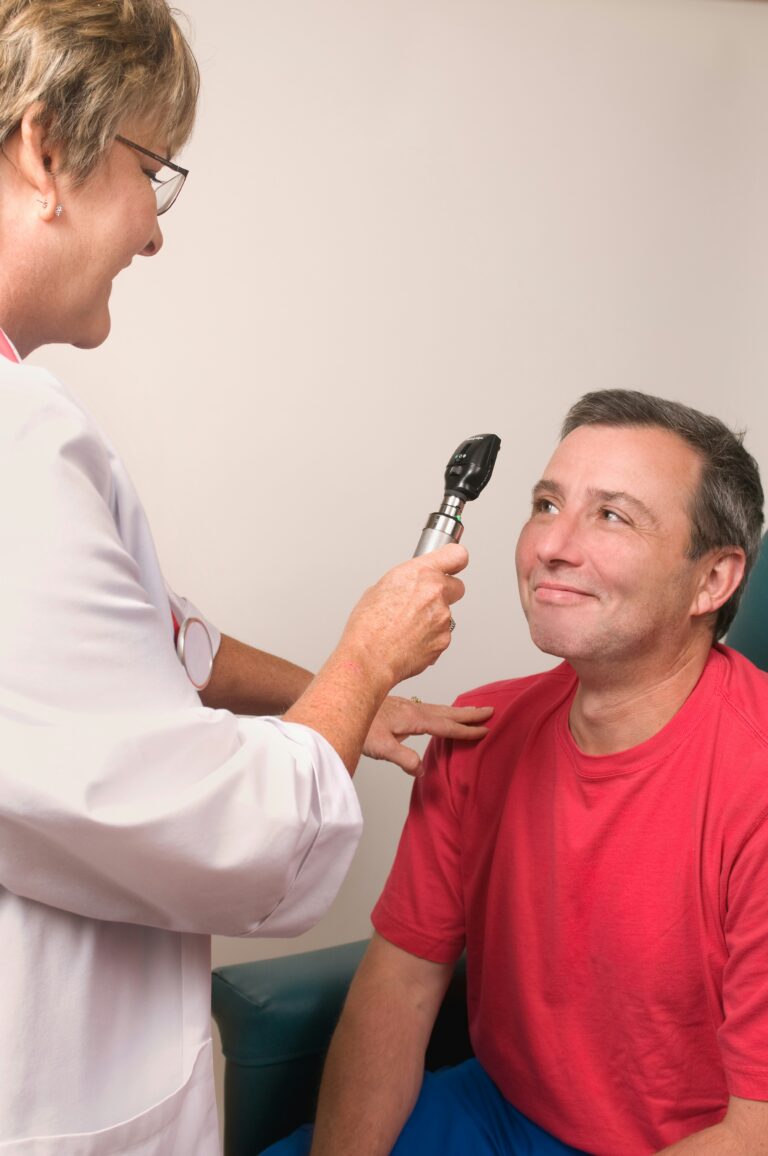
If any of these resonate, you should bypass the pharmacy aisle and schedule an appointment with an Ear, Nose, and Throat (ENT) physician. They can provide the audiologist clinical exam necessary to ensure your ears are healthy enough for any device.
Conditions That OTC Hearing Aids Cannot Treat
It is a common misconception that all hearing loss is caused by “aging ears.” There are several conditions that OTC hearing aids cannot treat, and trying to use them in these cases is like putting a bandage on a broken bone.
- Earwax Impaction: You’d be surprised how many “deaf” ears are actually just plugged with wax. An OTC hearing aid will actually push the wax deeper, making the problem worse. Use an earwax removal drop or an electric ear cleaning kit to remove earwax. Never Q-tips
- “Plumbing” Issues (Conductive Loss): This is hearing loss caused by problems in the middle ear, such as fluid behind the eardrum or stiffening of the tiny ear bones (otosclerosis). Since the problem is physical, simple amplification often isn’t enough.
- Tinnitus (Ringing in the Ears): While some high-end OTC aids like the [Elehear Alpha Pro] have basic masking features, complex tinnitus often requires “Notched Noise Therapy” or cognitive behavioral therapy that only an audiologist can provide.
- Cognitive or Dexterity Challenges: If a senior has significant arthritis or tremors, they may struggle to change the tiny wax guards or batteries in an OTC device. Similarly, if there are memory issues, the complex smartphone apps required for setup can lead to frustration and “desk drawer syndrome,” where the aids end up unused in a drawer.
Understanding that there are conditions that OTC hearing aids cannot treat is essential for caregivers. If your loved one has a history of ear surgeries or chronic infections, they likely have a “complex” ear that needs a custom-molded prescription device.
Understanding OTC Hearing Aids Risks and Warnings
Beyond the medical red flags, there are broader OTC hearing aids risks and warnings that every consumer should consider.
The Risk of Missed Diagnosis
The biggest danger isn’t the device itself; it’s what the device hides. When you self-diagnose, you bypass the professional who is trained to spot the 10% of hearing losses that are caused by treatable medical conditions (like tumors or infections).
The Warning of Poor Fit
Since OTC aids are “one size fits most,” they may not sit correctly in your ear canal. This can lead to:
- Acoustic Feedback: That annoying whistling sound that happens when amplified sound leaks out and gets picked up by the microphone again.
- Physical Irritation: Sores or rashes in the ear canal from a device that is too large or made of irritating materials.
The Warning of Unmet Expectations
Many OTC hearing aids risks and warnings involve “brain fatigue.” If you have moderate-to-severe loss and try to use a mild-loss OTC device, your brain still won’t get the clarity it needs. This can lead to social withdrawal and depression because the user feels that “even hearing aids don’t work for me,” when in reality, they just had the wrong hearing aids.
For a broader look at the risks of ignoring these warnings, read our post on the Risks of Untreated Hearing Loss in Seniors.
Who is the Ideal Candidate? (The “Green Flags”)
To be fair, OTC aids are wonderful for the right person. You should consider them if:
- Your hearing loss is mild (you only struggle mostly in noisy environments).
- You are comfortable using a smartphone app.
- Your ears are physically healthy (no pain or drainage).
- You want a low-cost entry point into hearing health.
If this describes you, check out our 2026 reviews of The Best OTC Hearing Aids for Seniors.
Best Practices and Recommendations
If you’re still unsure whether you fall into the category of those who should not use OTC hearing aids, follow these three steps to protect your health:
- Get a Professional Baseline: Even if you want to buy OTC, go to an audiologist for one clinical test first. Tell them, “I’m considering OTC aids, but I want to make sure my ears are medically cleared.” Most will be happy to help you understand your results.
- Use the “Siren Test”: If you are standing on a sidewalk and a fire truck passes with its sirens on, and it doesn’t feel “loud” to you, you likely have severe loss. This is one of the clearest signs you need a prescription hearing aid.
- Check the Return Policy: Never buy a device – especially an OTC one – that doesn’t have at least a 30-day money-back guarantee. If you realize within the first week that it isn’t helping, you need a way out.
For those who do need professional help, look for “unbundled” clinics that allow you to pay for the exam and the devices separately. This can help bridge the gap between the low cost of OTC and the high quality of prescription care.
The new era of accessible hearing tech is exciting, but it requires us to be “smart shoppers.” By knowing those who should not use OTC hearing aids, you are protecting yourself from the OTC hearing aids risks that can lead to permanent ear damage or missed medical diagnoses.
Remember: Are OTC hearing aids safe for severe hearing loss? No. Are there conditions that OTC hearing aids cannot treat? Yes, many. If you have any doubt at all, choose the path of safety and see a professional. Your hearing is the gateway to your relationships and your brain health – it’s worth the extra step.
Still not sure where you stand? [Take our 2-Minute Hearing Loss Assessment to see if OTC is right for you].
Caregivers: Download our “Senior Hearing Health Checklist” to help you spot the red flags before your loved one buys their next device.