She needed a wheelchair for six weeks after knee replacement surgery. Her daughter drove to the medical supply store, spent $340 on a standard wheelchair, used it for exactly 47 days, and then stored it in the garage, where it has sat for three years. The rental would have cost $28 a month. A single phone call to Medicare could have covered it at little to no out-of-pocket cost. Nobody told them that, and the $340 decision seemed obvious in the moment.
That scenario plays out thousands of times a day across the United States. Families make adaptive equipment for seniors decisions quickly, under pressure, without the information they need, and they either overpay to own something they’ll use briefly, or they commit to renting indefinitely when purchasing would have saved them money within months.
This guide gives you the decision framework that should have existed at that medical supply store. By the end, you’ll know exactly when renting adaptive equipment makes clear financial sense, when buying is the smarter investment, which devices almost always fall into one category, how Medicare coverage for adaptive equipment works in practice, and what questions to ask before spending a dollar either way.
Why the Rent or Buy Decision Is Harder Than It Looks
On the surface, the math seems simple: if you’ll use something for a short time, rent it; if you’ll use it long-term, buy it. But that logic only holds if you know – with reasonable confidence – how long you’ll need the equipment. And that is precisely what most people don’t know at the moment they need to decide.
Adaptive equipment for seniors, also called assistive devices or durable medical equipment (DME), encompasses a wide range of products: wheelchairs, walkers, canes, shower chairs, hospital beds, stair lifts, grab bars, lift chairs, CPAP machines, oxygen concentrators, and more. Each category has its own usage pattern, its own cost structure, and its own Medicare and insurance coverage rules.
The term durable medical equipment (DME) is a Medicare designation and not just a product description. Medicare defines DME as medically necessary equipment, prescribed by a physician, expected to last at least three years, and used in the home. That definition matters because it determines what Medicare will pay for, and under what arrangement.
According to the Centers for Medicare and Medicaid Services (CMS), Medicare Part B covers DME at 80% of the approved amount after the deductible, meaning you are responsible for the remaining 20%, plus any applicable deductible. Medicare Supplement (Medigap) policies often cover that 20% copay, potentially leaving you with little to no out-of-pocket cost. Medicare Advantage (Part C) plans vary considerably in their DME benefits, and some are more generous than original Medicare, some less.
Here is the factor most people don’t know: Medicare itself determines whether it will rent or purchase certain DME on your behalf, and for some categories, that determination is made by CMS, not by you. Understanding how Medicare handles renting vs buying mobility aids and assistive devices in each category is one of the most practically useful pieces of information in this entire article.
For the full context of how adaptive equipment for seniors fits into a comprehensive aging-in-place plan, alongside home modifications, care support, and technology, see our complete guide to aging in place.
The Core Decision Framework: When to Rent, When to Buy
Factor 1: Expected Duration of Use
This is the foundational variable and the one most people misjudge.
When renting makes sense: Short-term, time-limited needs. Post-surgical recovery. Rehabilitation after a hospitalization. A temporary mobility limitation with a clear resolution timeline. As a general benchmark: if you expect to need the equipment for fewer than three to four months, renting is almost always the better financial choice.
When buying makes sense: Ongoing, long-term, or permanent needs. A progressive condition like Parkinson’s disease or osteoarthritis that will require the equipment indefinitely. A functional limitation that is stable rather than resolving. If the equipment will become a permanent fixture of daily life, ownership builds toward a breakeven point that rental never reaches.
The complication: Many people don’t know which category they’re in. After a stroke, will mobility improve significantly? After a hip fracture, will the person return to walking independently? If you genuinely don’t know, renting preserves flexibility. You can always transition to purchasing once the picture is clearer, and many rental agreements allow purchase credit to apply toward a buyout.
Factor 2: Medicare’s Rental-to-Purchase Rules for Specific DME Categories
This is where the pros and cons of renting vs buying assistive devices become specific to the equipment category, and where Medicare’s rules deserve close attention.
Medicare’s capped rental program applies to many categories of DME. Under this arrangement:
- Medicare rents the equipment on your behalf for a capped period of 13 months of continuous use
- After 13 months, ownership transfers to you automatically at no additional charge
- Medicare continues to cover maintenance and repairs after the transfer
This means that for many common DME categories like standard power wheelchairs, certain hospital beds, and CPAP machines, the rent-or-buy question is effectively answered by Medicare’s program structure. You rent through Medicare, reach the cap, and own the equipment outright.
Categories typically handled through Medicare’s capped rental:
- Standard and complex power wheelchairs
- Hospital beds
- CPAP and BiPAP machines for sleep apnea
- Oxygen concentrators (handled slightly differently – Medicare covers rental indefinitely for oxygen)
- Certain mobility scooters
Categories Medicare typically purchases outright from the start:
- Walkers
- Manual wheelchairs (standard)
- Canes
- Crutches
- Blood glucose monitors
Knowing which category your equipment falls into before you visit a medical supply store prevents the most common and costly mistake in this space: purchasing out-of-pocket something that Medicare would have covered through rental.
Factor 3: Cost of Renting vs Buying Mobility Aids Over Time
The cost of renting vs buying mobility aids varies significantly by equipment type. Here are cost ranges for common categories:
Manual wheelchair:
- Purchase price: $150–$600 (standard); $1,500–$5,000+ (custom or lightweight)
- Rental cost: $15–$40/month
- Breakeven point (purchase vs rental): 4–15 months depending on model
Standard rollator walker:
- Purchase price: $50–$200
- Rental cost: $10–$20/month
- Breakeven point: 3–10 months – purchase almost always wins quickly for walkers
Hospital bed (standard):
- Purchase price: $500–$2,000
- Rental cost: $100–$200/month
- Breakeven point: 5–10 months – but Medicare’s 13-month capped rental program makes this largely irrelevant if you’re covered
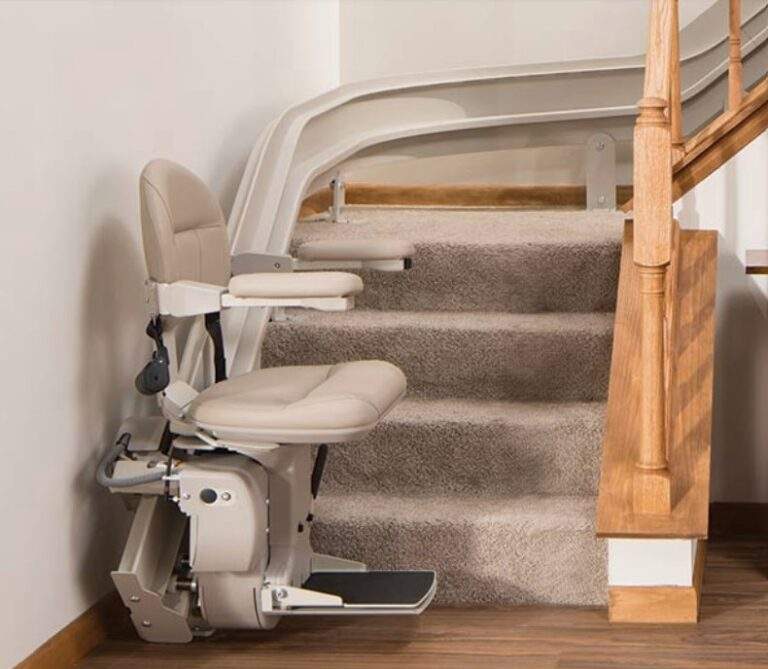
Stair lift (straight staircase):
- Purchase price: $3,000–$6,000 installed; refurbished units $1,500–$3,500
- Rental cost: $100–$200/month (limited availability)
- Breakeven point: 18–30 months – for long-term need, purchase is clearly better; for short recovery, rental (where available) may make sense
Shower chair or transfer bench:
- Purchase price: $30–$150
- Rental cost: $10–$20/month
- Breakeven point: 3–8 months – these are inexpensive enough that purchase almost always makes more sense unless need is very brief
CPAP machine:
- Purchase price: $500–$1,500
- Rental cost: Covered by Medicare’s capped rental program for qualifying patients
- Decision: Let Medicare handle this one through the capped rental pathway
Factor 4: Condition Stability and Trajectory
One of the most important and most overlooked variables in the when to rent or buy adaptive equipment for seniors decision is the trajectory of the underlying condition.
For stable conditions – arthritis that has reached a plateau, a fixed mobility limitation following an old injury, the need for equipment is predictable and long-term. Purchase makes sense.
For progressive conditions – Parkinson’s disease, ALS, multiple sclerosis, and advancing heart failure – needs will change over time. The walker adequate today may need to become a rollator in 18 months, which may need to become a wheelchair within three years. In these situations, renting or buying modular equipment that can be adjusted as needs change is often smarter than purchasing equipment optimized for current function that will become inadequate.
The American Occupational Therapy Association (AOTA) recommends that people with progressive neurological conditions work with a licensed OT to anticipate equipment needs at multiple stages of their condition, rather than making reactive purchases as each new limitation emerges. This kind of planning often saves significant money over time.
For guidance on how home modifications should be planned alongside adaptive equipment for progressive conditions, see our guide to universal design for aging in place.
Factor 5: Equipment Condition, Hygiene, and Fit
Rental equipment is used equipment. For many categories of adaptive equipment for seniors – shower chairs, bath transfer benches, commodes, and any equipment with close body contact – hygiene and sanitation are real considerations.
Reputable medical equipment suppliers sanitize and inspect equipment between rentals. But “reputable” is the operative word. Before accepting any rented hygiene-adjacent equipment, ask:
- What is the cleaning and sanitization protocol between renters?
- Can you inspect the equipment before accepting it?
- Is the equipment in good cosmetic and mechanical condition?
For custom-fit equipment, like certain orthotic devices, specialized wheelchairs, and hearing-related assistive technology, rental is often impractical because fit matters too much. Equipment that must be calibrated or molded to an individual is generally a purchase.
Factor 6: Storage, Maintenance, and End-of-Use Considerations
Renting removes two problems that purchasing creates: storage and disposal.
A hospital bed takes up a full room. A power wheelchair requires garage or hallway space. A stair lift cannot easily be sold or repurposed. When a period of need ends, maybe recovery is complete, or a more difficult transition occurs, owned equipment must be dealt with. Families often find themselves with large, expensive equipment they cannot use, don’t know how to sell, and cannot easily donate.
Renting eliminates this entirely. When the need ends, the equipment goes back.
This consideration is especially relevant for families managing end-of-life care at home, where high-volume DME (hospital beds, lifts, commodes) may be needed for a period of time. Hospice programs, covered under Medicare Part A, typically provide necessary DME as part of the hospice benefit, thus removing the rent-or-buy question entirely for qualifying patients.
A Plain-Language Decision Summary
Rent when:
- You need equipment for fewer than 3–4 months
- The underlying condition is resolving or uncertain in trajectory
- Medicare’s capped rental program applies and you are covered
- The equipment has hygiene considerations and you prefer new
- Storage or disposal of owned equipment is a genuine concern
Buy when:
- You will need the equipment for more than 4–6 months with high confidence
- The condition is stable or progressive and long-term need is clear
- The equipment is low-cost enough that even short rental periods cost more (walkers, shower chairs, basic canes)
- The equipment requires custom fitting or calibration to your specific body
When to See a Specialist
For straightforward, low-cost adaptive equipment for seniors, like a basic cane, a shower chair, a standard walker, a medical supply store staff member and your primary care physician can guide your decision adequately.
For anything more complex or expensive, two professionals are worth consulting:
A licensed occupational therapist (OT) is the appropriate clinical specialist for the selection of adaptive equipment for seniors. OTs are trained to assess your functional abilities, identify what equipment genuinely matches your needs, ensure fit and safety, and provide the documentation Medicare requires for complex DME. Your primary care physician can provide a referral, or contact your local Area Agency on Aging for OT resources in your community.
An aging life care manager (sometimes called a geriatric care manager) can help coordinate equipment decisions within a broader care plan, especially useful when multiple types of equipment are needed or when a progressive condition makes ongoing planning important.
Questions to bring to your OT appointment:
- Given my current functional limitations and likely trajectory, what equipment do I actually need right now versus what I might need in 12 to 24 months?
- What documentation will you provide to support Medicare coverage for the equipment you’re recommending?
For broader guidance on navigating healthcare professionals in the context of aging-in-place planning, see the complete guide to aging in place.
A Note for Family Members and Caregivers
If you’re helping a parent acquire adaptive equipment, resist the instinct to move quickly. The pressure to “just get something” after a hospitalization or a fall is real, but decisions made under that pressure are often the most expensive ones.
The most useful thing you can do before any equipment purchase or rental is make two phone calls: one to Medicare to verify coverage, and one to your parent’s physician to obtain a written prescription. Both calls take under 20 minutes. Together, they can shift significant costs from out-of-pocket to covered.
Also worth knowing: if your parent has received a discharge from a hospital or skilled nursing facility, a discharge planner or social worker on staff can often assist directly with Medicare DME paperwork and supplier connections. Ask for that resource specifically before leaving the facility.
For broader guidance on coordinating care and services for a parent aging at home, see our resources on [building a support system for aging in place].
The Bottom Line on Adaptive Equipment for Seniors
Adaptive equipment for seniors decisions come down to three questions: How long will you need it? Does Medicare cover it, and how? And does the equipment require custom fit or long-term use that makes ownership clearly smarter?
For most short-term, post-recovery needs, renting is the right call, and Medicare’s capped rental program often makes renting effectively free for eligible equipment categories. For long-term, stable needs, especially low-cost items like walkers and shower chairs, purchasing outright is almost always the faster path to value.
The single most costly mistake in this space is paying out of pocket for equipment that Medicare would have covered. Get the prescription first. Call Medicare second. Visit the supply store third.
Your next step: If you’re also evaluating what your home needs to support safe, independent living alongside your equipment decisions, our aging-in-place remodeling checklist walks you through every home modification category, so your home and your equipment work together rather than at cross-purposes.
Making this decision carefully with the right information instead of under pressure is one of the most practical things you can do for your independence, your safety, and your budget.