How to Detect Hearing Loss at Home: Shocking Early Signs
Have you noticed lately that the evening news seems to be mumbled? Or perhaps you’ve found yourself turning up the volume on the television until the neighbors can hear it, yet the dialogue still feels fuzzy. It is easy to blame the speakers or the background music, but often, these are the first subtle whispers of a change in our own hearing.
Hearing loss is incredibly common. In the United States, nearly 25% of adults aged 65 to 74—and 50% of those over 75—have disabling hearing loss. Because it usually happens gradually, we often don’t realize how much we are missing until we’ve already pulled away from social gatherings or lost the thread of family conversations.
Learning how to detect hearing loss at home can be the first step toward reclaiming your social life. You don’t need a white lab coat or expensive equipment to start paying attention to the signs. By using simple observations and a few DIY techniques, you can determine if it is time to seek professional help. In this guide, we will explore the early signs of hearing loss you can test at home and provide actionable ways to check your hearing from the comfort of your favorite armchair.
Part 1: Spotting the Early Signs of Hearing Loss You Can Test at Home
Before you try a specific “test,” the most reliable way to detect hearing loss at home is to look at your daily habits. Your brain is excellent at compensating for loss, but it leaves clues behind.
The “Volume Check”
One of the most obvious early signs of hearing loss you can test at home involves your electronics.
- The Test: Ask a family member or a friend with normal hearing to set the TV or radio to a volume that is comfortable for them.
- The Result: If you find that you need to turn it up significantly higher to understand the words, your ears may be struggling with specific frequencies.
The Restaurant Simulation
Hearing loss in seniors often begins with “speech-in-noise” trouble.
- The Test: Try to have a conversation while the kitchen faucet is running or the dishwasher is on.
- The Result: If the background noise makes it impossible to follow the person standing right next to you, this is a hallmark sign of age-related hearing decline.
Social Withdrawal Clues
Sometimes the sign isn’t what you hear, but how you feel.
- The Test: Think about your last family gathering. Did you find yourself staying quiet because you were afraid of answering a question incorrectly?
- The Result: Emotional fatigue and social withdrawal are major indicators when considering how to check hearing loss in seniors at home.
If you find yourself avoiding parties, you aren’t alone. Read more about the social effects of hearing impairments on seniors here
Part 2: Home Hearing Test for Adults Without Equipment
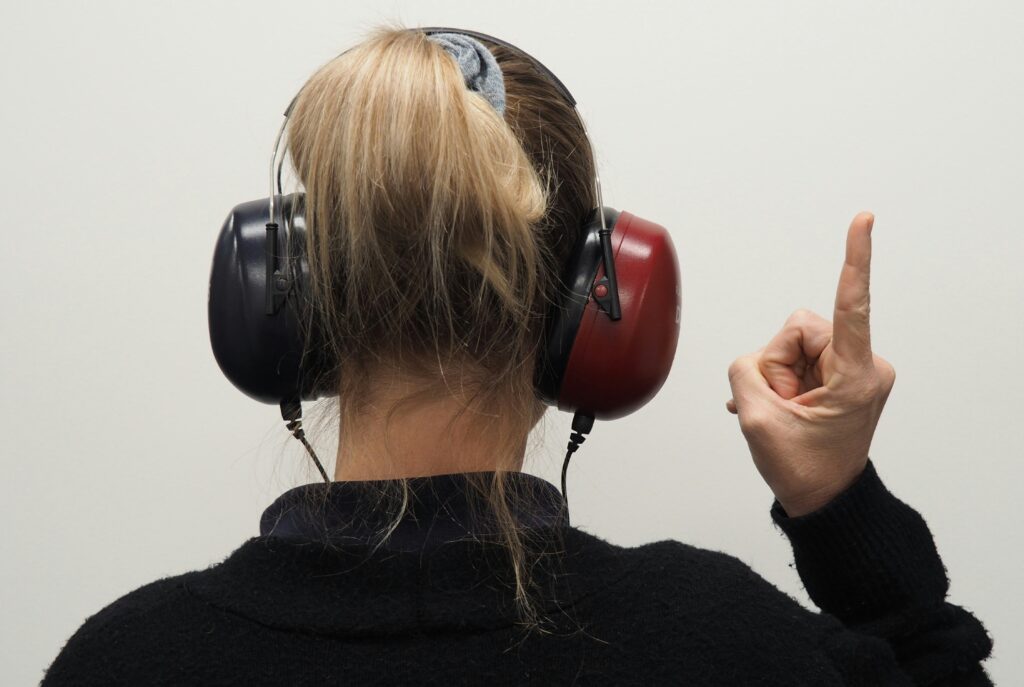
If you want something more concrete than just observation, there are several simple hearing loss tests you can do at home that require nothing more than a quiet room and a helping hand.
1. The Finger Rub Test
This is a quick way to check high-frequency hearing, which is usually the first to go.
- How to do it: Close your eyes. Raise your hand about six inches away from one ear. Rub your thumb and forefinger together briskly.
- What to look for: You should hear a soft “shhh” or “scratching” sound. If you hear it in one ear but not the other, or if you can’t hear it at all until your fingers are touching your ear, you likely have some degree of loss.
2. The Whisper Test
This is a classic home hearing test for adults without equipment that is often used in basic medical screenings. You will need a partner for this one.
- How to do it: Have your partner stand about an arm’s length behind you. Plug one of your ears with your finger. Your partner should whisper a combination of three letters and numbers (for example, “4-K-2”).
- What to look for: If you cannot repeat the sequence, have them try again at a slightly louder whisper. If you consistently fail to hear the whisper from a few feet away, it’s a strong signal of a problem.
3. The Mechanical Clock Test
If you have an old-fashioned, ticking watch or a small mechanical clock, you have a built-in testing device.
- How to do it: Hold the ticking watch next to your ear and slowly move it away.
- What to look for: Note the distance at which the ticking disappears. Compare this with a younger family member. If they can hear it from three feet away and you can only hear it from three inches, your high-frequency hearing is likely diminished.
Part 3: Digital Tools and Screeners
In today’s world, detecting hearing loss at home has become much easier thanks to technology. There are now several simple hearing loss tests you can do at home using your tablet, computer, or smartphone.
- Online Pure-Tone Tests: Many reputable organizations, such as the National Council on Aging (NCOA), offer free online screeners. You put on a pair of headphones and click a button when you hear a tone.
- App-Based Tests: Apps like the “Mimi Hearing Test” are validated by researchers. They provide a “hearing map” that shows which frequencies you might be missing.
- The “Digits-in-Noise” Test: This is a specific type of digital test that plays numbers over background “hissing” noise. It is excellent at detecting the type of loss that makes conversation in restaurants difficult.
If your home test shows a decline, don’t worry. It might be linked to other manageable conditions. Learn about the connection between High Blood Pressure & Hearing Loss here
Part 4: How to Check Hearing Loss in Seniors at Home (For Caregivers)
If you are a caregiver trying to determine how to check for hearing loss in seniors at home, look for “behavioral workarounds.” Seniors are often experts at hiding their hearing loss. Look for these “red flags”:
- Lip-Reading: Do they stare intently at your mouth when you speak?
- The “Delayed Laugh”: Do they wait for others to laugh before joining in?
- The “What?” Frequency: Do they ask you to repeat yourself more than three times in a single conversation?
- Startle Response: Do they seem jumpy or startled when you enter a room? This often happens because they didn’t hear your footsteps approaching.
Detecting hearing loss is the first step to protecting the brain. Here’s how it affects your brain and why it is important.
Tips and Best Practices for Home Testing
If you’ve used these methods for how to detect hearing loss at home and the results suggest a problem, keep these best practices in mind:
1. Don’t Panic
Hearing loss is a medical condition, not a personality flaw. Detecting it early is a victory because it allows you to take action before it impacts your memory or mood.
2. Check for “Simple” Fixes First
Before assuming it is permanent nerve damage, check for earwax.
- Tip: If your hearing loss developed suddenly or feels “plugged,” it may be due to a wax buildup. Do not use Q-tips! Use a safe over-the-counter softening kit, like this.
3. Use Quality Headphones
If you are using an online or app-based home hearing test for adults without equipment, make sure you use “over-the-ear” headphones rather than tiny earbuds. They provide a much more accurate result by blocking out room noise.
4. Record Your Results
Write down the specific sounds you struggle with. Do you struggle with the microwave beep? Your wife’s voice? The TV? This “diary of sounds” will be incredibly helpful when you eventually see an audiologist.
5. Explore Solutions
If your home testing confirms a loss, you have many options. You don’t always need a $5,000 prescription.
- Many seniors find success with FDA-approved Over-the-Counter (OTC) hearing aids for mild to moderate loss. [Check out our review of the Best Hearing Aids for Seniors] to see high-quality, affordable options.
Knowing how to detect hearing loss at home is about giving yourself the gift of clarity. By staying alert, you can pinpoint the early signs of hearing loss you can test at home—like the TV volume or the “Finger Rub” test—you can catch the decline before it leads to isolation.
A home test is a “screener,” not a final diagnosis. If these simple hearing loss tests you can do at home show that you are missing out on the sounds of life, the next step is a professional evaluation. You deserve to hear every laugh, every secret, and every song.
Ready to take the next step?
- [Download our Free “Hearing Health” Checklist] – A simple checklist to bring to your next doctor’s visit.
- [Check our Recommended OTC Hearing Aids] – Find a discreet, powerful solution that fits your budget.