You’ve decided to stay in your home as you age, now comes the part where you figure out exactly what needs to change to make that possible for the long term. Whether you’re planning a full renovation, a targeted bathroom remodel, or a series of smaller upgrades over time, the challenge is always the same: knowing which renovations are needed for aging in place without missing anything that matters, and without spending money on things that don’t matter.
This aging in place remodeling checklist covers six areas of the home across 50+ specific items. It is designed to be used before you talk to a contractor, during a professional home assessment, or as a planning framework for phased renovations over time. Working through it completely takes 60 to 90 minutes. The result is a clear, prioritized list of every modification your home needs, and the ones it doesn’t.
Before you start: This checklist evaluates your home against the next 10 to 15 years. Try to assess each item through both lenses. A step-over tub that feels manageable today may not feel manageable after a hip replacement. The most cost-effective time to make an aging in place home modification is during a planned renovation, not in response to a fall.
How to Use This Checklist
Work through this checklist one section at a time. Each section covers a specific area of the home and can be completed in any order, but complete each section fully before moving to the next.
For each item, mark one of three outcomes:
- Done / In good shape – no action needed
- Needs attention – add to your renovation plan
- Not applicable – does not apply to your home layout
Pay special attention to items marked with bold text, as these are the non-negotiables that carry the highest safety weight.
If you are using this checklist to plan an aging in place renovation, bring your completed results to your contractor or CAPS specialist. It provides a precise starting point and prevents the common issue of costly modifications that don’t align with your actual needs.
For the full context behind why each of these modifications matters, including finances, care planning, and technology, see our complete guide to aging in place.
📥 Want a Printable Version? Download the free Aging in Place Remodeling Checklist PDF – formatted for printing, with checkboxes, a notes column, and a priority-ranking section for each item. Bring it to your contractor meeting or use it during a professional home assessment. [Download the Free PDF Checklist – No spam. Just the resource.]
The Checklist
Category 1: Entry Points and Exterior Access
The path from your vehicle or the street to your front door is the first place aging in place home modifications are needed, and one of the most commonly overlooked. A beautifully modified interior means nothing if you can’t get into the house safely.
- ☐ At least one zero-step entry into the home exists or can be created
- ☐ All walkways from parking area to entry door are level, stable, and crack-free
- ☐ Exterior steps have a sturdy handrail on at least one side – both sides preferred
- ☐ Handrails extend the full length of the steps, not just a partial run
- ☐ Entry door threshold is ½ inch or less, no raised lip that catches a toe or walker wheel
- ☐ Entry door is at least 32 inches wide in clear opening; 36 inches preferred
- ☐ Entry door handle is lever-style, not a round knob requiring grip and twist
- ☐ Exterior lighting covers the full path from parking to door
- ☐ Motion-activated lighting is in place at all exterior entry points
- ☐ Covered entry or porch protects the threshold area from rain and ice
- ☐ Doorbell is audible from all main living areas , or a visual doorbell alert exists
- ☐ Entry area has space for removing shoes, storing mobility aids, and sitting if needed
Most important item in this section: The zero-step entry. If your home currently has no accessible entry – only stepped approaches – this is the first structural renovation to plan. Everything else in this checklist depends on being able to get into the house. An aging in place renovation that begins with entry access sets the foundation for everything that follows.
Most commonly overlooked: Handrails that don’t run the full length of steps. A railing that ends two steps from the bottom provides no protection where many people actually need it most.
Category 2: Interior Doorways, Hallways, and Flooring
The interior of the home must allow safe, unobstructed movement on foot, with a cane or walker, and, if needed, in a wheelchair. This is the foundation for remodeling a home to support safe living for older adults.
- ☐ All primary doorways (bedroom, bathroom, kitchen) measure at least 32 inches clear – 36 inches preferred
- ☐ All interior door handles are lever-style throughout the home
- ☐ Main hallways are at least 36 inches wide – 42 inches preferred for walker or wheelchair clearance
- ☐ All flooring transitions between rooms are flush, no raised thresholds or lips
- ☐ All loose area rugs have been removed or fully secured with non-slip backing and double-sided tape on all edges
- ☐ Hard flooring surfaces (tile, hardwood, vinyl) have a matte or textured finish, not high-gloss polished
- ☐ Carpet, where present, is low-pile and firmly secured at all edges and seams
- ☐ No electrical cords, lamp cords, or extension cords cross any walking path
- ☐ Light switches are at a consistent 42–48 inch height throughout
- ☐ Rocker-style or illuminated light switches are installed in main hallways and bedrooms
- ☐ Nightlights are in place in hallways between the bedroom and bathroom
Most important item in this section: Doorway width. A doorway that is too narrow to accommodate a walker or wheelchair cannot be navigated around; it requires structural modification, which takes time and budget to plan. Measure every doorway you use daily and flag any under 32 inches as a renovation priority.
Most commonly overlooked: Flooring transitions. A ½-inch raised threshold between carpet and hardwood is nearly invisible until a walker wheel catches it. Check every transition point in the home.
Category 3: Bathroom Modifications
The bathroom is where the most serious aging in place home modifications are needed, and where the return on every dollar spent is highest. According to the CDC, bathroom falls account for a disproportionate share of the 36 million falls experienced by older adults annually in the U.S. Work through this section with particular care.
Shower and Tub
- ☐ A curbless (zero-threshold) shower exists or is planned – no step-over required
- ☐ Grab bars are installed inside the shower on the wall opposite the showerhead and on the entry wall
- ☐ Shower seat or fold-down bench is installed or can be added
- ☐ Handheld showerhead on an adjustable slide bar is in place
- ☐ Showerhead height is adjustable for seated use
- ☐ Shower floor is non-slip tile, textured surface, or fitted with a non-slip mat secured at all edges
- ☐ Single-lever shower control allows temperature and flow adjustment with one hand
- ☐ If a tub is retained, it is a walk-in tub with a door, not a step-over design
Toilet Area
- ☐ Grab bar is installed on the dominant-hand wall beside the toilet
- ☐ Toilet height is comfort-height (17–19 inches), or a raised toilet seat adapter is installed
- ☐ At least 18 inches of clear floor space exists on the dominant-hand side of the toilet
- ☐ 36 inches of clear floor space on the transfer side if a wheelchair is or may be used
- ☐ Toilet paper holder is within reach from a seated position without leaning
Vanity and General Bathroom
- ☐ Bathroom floor is non-slip throughout, matte or textured tile, not polished
- ☐ Faucet controls are single-lever or touchless not two separate handles
- ☐ Vanity height allows seated use, or knee clearance exists beneath for wheelchair access ☐ Mirror is accessible from both standing and seated heights
- ☐ Towel bars have been replaced with, or supplemented by weight-bearing grab bars
- ☐ Adequate lighting exists at the vanity and over the shower area
- ☐ A nightlight or motion-activated floor light is in place for nighttime use
- ☐ Bathroom door opens outward or is a sliding/pocket door, not inward-opening (which blocks rescue if a fall occurs against the door)
Most important item in this section: The grab bar beside the toilet and inside the shower. These two installations prevent more falls than any other single modification in the home. If nothing else from this entire aging in place remodeling checklist gets done, these two items must.
Most commonly overlooked: The bathroom door direction. An inward-opening bathroom door can trap a fallen person against it, blocking rescue. If your bathroom door opens inward and the space is small, rehanging it to open outward is a low-cost, high-value modification.
For detailed guidance on grab bar placement, walk-in shower options, and contractor selection, see our full guide to [home modifications for aging in place ].
Category 4: Kitchen Modifications
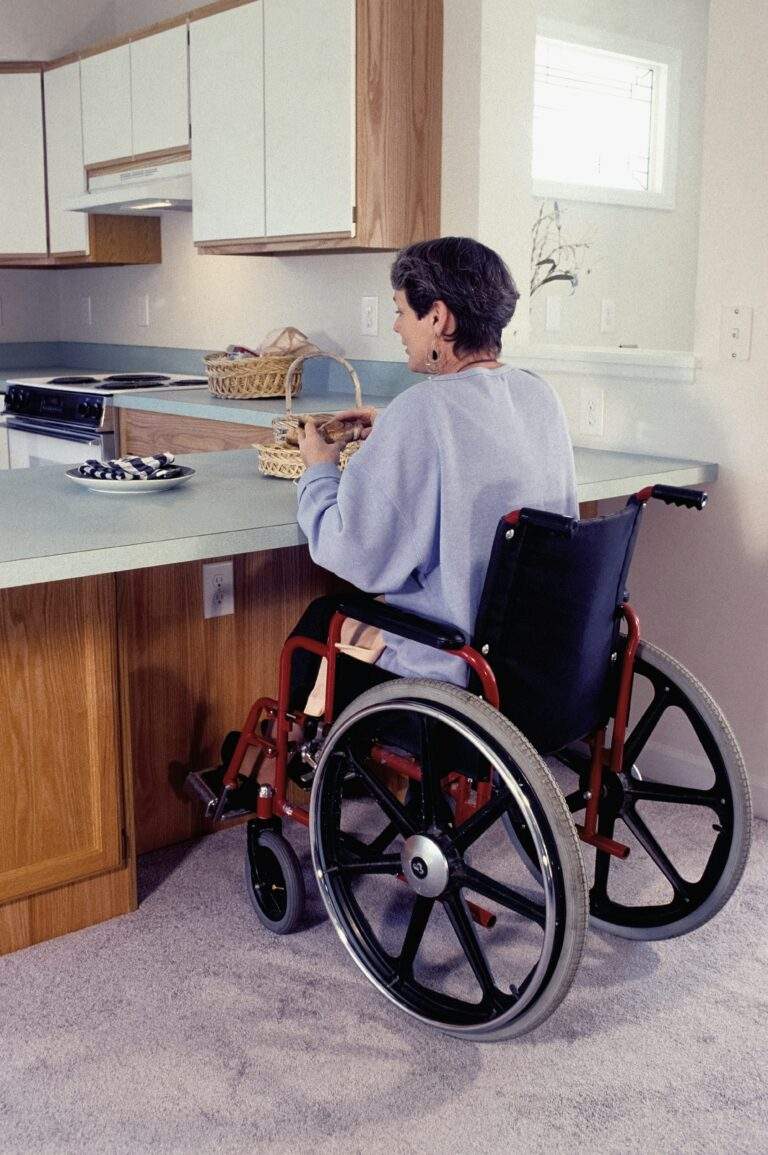
The kitchen doesn’t carry the same acute fall risk as the bathroom, but it is where daily function matters most over the long term. An aging in place renovation checklist for the kitchen focuses on reducing physical strain, improving access, and eliminating the need for reaching, bending, and gripping, which becomes harder with age.
- ☐ Frequently used items are stored between knee and shoulder height, no overhead reaching or floor-level bending required
- ☐ Base cabinet shelving is pull-out drawers or roll-out trays, not fixed shelves requiring deep reaching
- ☐ Cabinet hardware is D-ring pulls or bar handles, not small round knobs requiring pinch grip
- ☐ Countertop height includes at least one lowered section (28–32 inches) for seated or low-effort work
- ☐ Cooktop controls are at the front or side, not requiring a reach over an active burner
- ☐ Refrigerator is side-by-side or French door style not top-freezer requiring overhead reach
- ☐ Dishwasher is raised on a platform if deep bending to load and unload is difficult
- ☐ Faucet is single-lever or touchless, not two separate handles
- ☐ Under-sink space is clear and accessible, with insulated pipes if knee clearance is used
- ☐ Kitchen floor is non-slip no unsecured mats in front of the sink or stove
- ☐ Task lighting is adequate over every work surface, countertops, stove, and sink
- ☐ Microwave is at counter height, not mounted overhead, requiring arm-raise and tilt to retrieve hot food
Most important item in this section: Pull-out base cabinet storage. Fixed shelves in base cabinets require kneeling or deep bending that becomes progressively harder and riskier with age. This is one of the most impactful and relatively affordable kitchen modifications available.
Most commonly overlooked: The microwave location. An overhead microwave requires lifting hot, heavy dishes at arm height, one of the most common kitchen injury scenarios for older adults. Relocating it to counter height is a simple change with a significant safety impact.
Category 5: Bedroom and Living Areas
The bedroom and main living areas carry lower acute risk than the bathroom or kitchen, but they are where daily comfort, nighttime safety, and long-term functional independence are determined.
Bedroom
- ☐ Bed height allows feet to rest flat on the floor when sitting on the edge – 20–23 inches from floor to mattress top
- ☐ Clear path of at least 36 inches exists on the primary side of the bed
- ☐ Bedside lamp or lighting is reachable and operable without getting out of bed
- ☐ Phone, medical alert device, and any nighttime medications are within reach of the bed ☐ No loose rugs, cords, or furniture in the path between bed and bathroom
- ☐ Closet storage places daily-use items between knee and shoulder height
- ☐ Bedroom is on the main floor, or a plan exists for main-floor sleeping if stairs become unmanageable
Living Areas
- ☐ Primary seating (chairs, sofa) is at 18–20 inches seat height with sturdy armrests for assisted standing
- ☐ All walking paths through living areas are at least 36 inches wide
- ☐ No coffee tables or low ottomans create a strike hazard in main walking paths
- ☐ All lamp and electrical cords are routed against walls, not across floors
- ☐ Window treatments can be operated without overhead reaching or significant force
Most important item in this section: Seat height with armrests. A chair or sofa that is too low or lacks armrests makes standing up progressively harder and riskier. This is often the first functional challenge people notice at home, and one of the easiest to address.
Most commonly overlooked: The bedroom location. If your primary bedroom is on the second floor and the stairs become unmanageable, your entire living situation changes. Planning for a main-floor bedroom option, even if not needed now, is a prudent part of any aging in place renovation checklist.
Category 6: Staircases, Lighting, and Whole-Home Systems
This final section covers the elements that span the entire home, staircases that touch every floor, lighting that affects every room, and systems that support safety and communication throughout.
Staircases
- ☐ Every staircase has a graspable handrail on at least one side – both sides preferred
- ☐ Handrails run the full length of the staircase from top to bottom
- ☐ Handrail diameter is 1.25–1.5 inches easy to grip fully with the hand
- ☐ Stair treads are in good condition no loose carpet, no cracked wood, no uneven edges
- ☐ Non-slip strips or treads are applied to all stair surfaces
- ☐ Lighting illuminates the full staircase, light switches at both top and bottom
- ☐ A stairlift has been evaluated if stairs are already difficult to navigate or if a progressive condition makes this likely
Lighting and Electrical
- ☐ Every room, hallway, and staircase has adequate lighting for its primary use
- ☐ Nightlights or motion-activated floor lighting illuminate the path from bedroom to bathroom
- ☐ All light switches are at 42–48 inch height and are rocker-style or illuminated
- ☐ Electrical outlets are at 18–24 inch height, not at floor level, requiring bending
- ☐ Smoke detectors have both audible and visual alerts (strobe) especially important for anyone with hearing loss
Emergency and Communication Systems
- ☐ A medical alert system is in place or has been evaluated – see our comparison of [medical alert systems for seniors here]
- ☐ Telephone or mobile phone is accessible from every primary room
- ☐ Emergency contacts are posted in a visible location like refrigerator, bedside, entry
- ☐ Carbon monoxide detectors are installed on every floor
- ☐ A plan exists for power outages, including any powered medical equipment
Most important item in this section: Full-length, graspable handrails on every staircase. A railing that wobbles, ends early, or is too large to grip fully provides false security, which may be more dangerous than no railing at all.
Most commonly overlooked: Outlet height. Floor-level outlets require bending to plug in and unplug devices, which is both a daily inconvenience and a fall risk. Raising outlet heights during any electrical work is a low-cost, high-value upgrade.
Red Flags and Non-Negotiables
The items below are not simply “needs attention”; they represent conditions where the risk is immediate and significant enough to require action before anything else on this list. If any of these apply to your home, prioritize them above all other aging in place home modifications.
a. No Accessible Entry Into the Home
If every entry point requires navigating steps without a railing or steps at all, your home is one fall or one mobility change away from being impossible to access. This is not a future concern. It is a present one. Contact a CAPS-certified contractor to evaluate zero-step entry options before beginning any other renovation work.
b. No Grab Bars in the Bathroom
A bathroom without grab bars at the toilet and shower is the single highest-risk condition in any home being assessed for aging in place. Towel bars are not a substitute, as they will pull from the wall under body weight. Professional grab bar installation is the most urgent item on any aging in place remodeling checklist, and the one with the clearest, most immediate return on investment.
c. Inward-Opening Bathroom Door in a Small Space
If your bathroom door opens inward and the room is small, a fall against the door can prevent the door from being opened from the outside, blocking rescue. This is a documented emergency situation. Rehanging the door to open outward, or converting to a sliding or pocket door, resolves it completely and is generally low in cost.
d. Staircase With No Handrail or a Loose Handrail
A staircase without a railing or with a railing that moves when gripped is an active fall hazard. This applies to interior stairs, exterior steps, and even a single porch step. A handrail that wobbles under pressure gives the user false confidence and may actually increase fall risk versus no railing at all. Have it inspected and properly secured or replaced before any other staircase modification.
e. Primary Bedroom Only Accessible by Stairs – With No Alternative
If navigating stairs becomes impossible due to surgery, a fall, a progressive condition, or a medical event, and there is no main-floor sleeping option, you may be unable to stay in your home without emergency modifications. Plan for a main-floor bedroom option now, even if it is not currently needed. Identify the room and what it would take to convert it. This is how to remodel a home for elderly living safely over the long term, not just for today.
f. Significant Fall History Combined With Unmodified Bathroom
If you or your loved one has experienced more than one fall in the past 12 months and the bathroom remains unmodified- no grab bars, step-over tub, non-slip flooring – this combination represents urgent and compounding risk. Do not wait for the next fall to act. Contact your physician for a referral to an occupational therapist for a home safety assessment immediately.
What to Do After Completing This Checklist
If Your Results Are Mostly Positive (Fewer Than 5 Items Flagged)
Your home is in reasonably good shape. Focus your attention on the flagged items and prioritize any that fall in the Red Flags section above. For the remaining items, develop a simple timeline – which can be addressed in the next 30 days or six months, and which can be built into future renovation plans. Review this checklist again annually or after any significant health change.
If Your Results Are Mixed (5–15 Items Flagged)
You have meaningful work to do, and now you know exactly what it is. Group your flagged items by room and by urgency. Bathroom and entry modifications should lead. Contact a CAPS-certified contractor for a quote and bring this completed checklist as your starting brief. If cost is a concern, contact your local Area Agency on Aging for information on modification assistance programs in your community. Many states and counties offer grants or low-interest loans specifically for aging in place home modifications.
If Your Results Show Significant Concerns (More Than 15 Items Flagged, or Any Red Flag Triggered)
Before planning any renovation, schedule a professional home assessment with a licensed occupational therapist. An OT will evaluate your specific physical abilities against your home’s specific layout and give you a prioritized list of modifications that is personalized and not generic. Ask your primary care physician for a referral, or contact your local AAA. Bring this completed checklist to the appointment.
For a guided walkthrough of how to conduct or prepare for a professional assessment, see our post on how to do an aging in place home assessment, room by room here
A Note for Family Members and Caregivers
If you are completing this aging in place renovation checklist on behalf of or alongside a parent, the most important thing you can do is involve them in the process, not present them with your conclusions afterward. Walk through the home together. Let them tell you which areas feel uncertain. The items they flag may be different from the ones you notice, and both sets of information matter.
Disagreement about what the checklist results mean, especially around Red Flag items, is common and understandable. A bathroom modification that feels urgent to you may feel like an admission of decline to your parent. Frame modifications around function and planning, not fear. “Let’s get this done now while we can plan it properly” feels better than “This isn’t safe.”
If the family dynamic around these conversations is genuinely complicated, see our resources on [building a care support system] for guidance on navigating care planning with a resistant or reluctant parent.
You Now Have a Complete Renovation Roadmap
This aging in place remodeling checklist gives you exactly what you need to plan every modification your home requires in priority order, organized by room, with clear guidance on what can wait and what cannot.
The two things most worth carrying forward: the bathroom is always the highest priority, and the Red Flags section is where you start not where you finish. Everything else can be phased. Those items cannot.
Your next step: Download the free Aging in Place Remodeling Checklist PDF to get a printable version with a notes column and a priority-ranking field for every item, formatted to bring to a contractor meeting or a professional home assessment.
[Download the Free Checklist PDF Here]
Being this thorough about your home’s safety is not a small thing; it is one of the most concrete, meaningful steps you can take toward staying where you want to be for the long term, and doing it on your terms.