Imagine you are sitting at your favorite neighborhood diner. Across the table, your oldest friend is telling a story about their recent trip to the Grand Canyon. The restaurant is buzzing with the clinking of silverware and the low hum of the air conditioner. You catch every third word. You smile when they smile. You nod when they pause. On the outside, you look perfectly engaged, but on the inside, you feel like you are watching a movie with the sound turned off. You tell yourself, “It’s just a noisy room,” or “I’ll deal with this when it gets worse.”
This is the “Silent Thief” of senior life. We often brush off these moments as a natural part of aging, but that shrug of the shoulders is often fueled by misinformation. Several hearing loss myths circulate through senior centers and coffee shops, leading many of us to delay care.
Why does this matter? Because ignoring the truth doesn’t just affect your ears; it affects your brain, your safety, and your heart. In the United States, roughly 30% of adults over 65 have significant hearing impairment, yet only a small fraction seek help. By debunking these common hearing loss myths seniors believe, you can reclaim the sounds of your life and protect your long-term health.
1. Myth: “Hearing Loss is Just an Inevitable Part of Aging”
This is perhaps the biggest of the biggest hearing loss myths about aging. We treat losing our hearing like gray hair or wrinkles – something we just have to accept.
In the U.S., hearing loss is the third most common chronic physical condition. Just as you would get a hip replacement to stay mobile, you should address your ears to stay connected. Treating hearing loss early can significantly slow down the perceived “aging” process by keeping you socially active and mentally sharp.
2. Myth: “If I Had a Problem, My Family Doctor Would Have Told Me”
Many seniors believe that a standard physical exam includes a comprehensive hearing check. They assume that if the doctor didn’t bring it up, their ears must be fine.
The Fact: Surprisingly, less than 20% of primary care physicians in the U.S. routinely screen for hearing loss during an annual physical. Most doctors only check your ears for wax or infection. Unless you specifically complain about your hearing, it often goes unaddressed.
Why hearing loss myths are dangerous for seniors in this context is because it places the burden of proof on the patient. You must be your own advocate. If you find yourself turning up the TV or struggling in restaurants, don’t wait for your doctor to mention it.
Not sure how to bring it up? Read this to learn how to start the conversation with a professional.
3. Myth: “Hearing Aids are Big, Ugly, and Make Me Look Old”
When many of us think of hearing aids, we picture the bulky, beige “bananas” our parents wore in the 1970s. Those devices whistled, buzzed, and were impossible to hide.
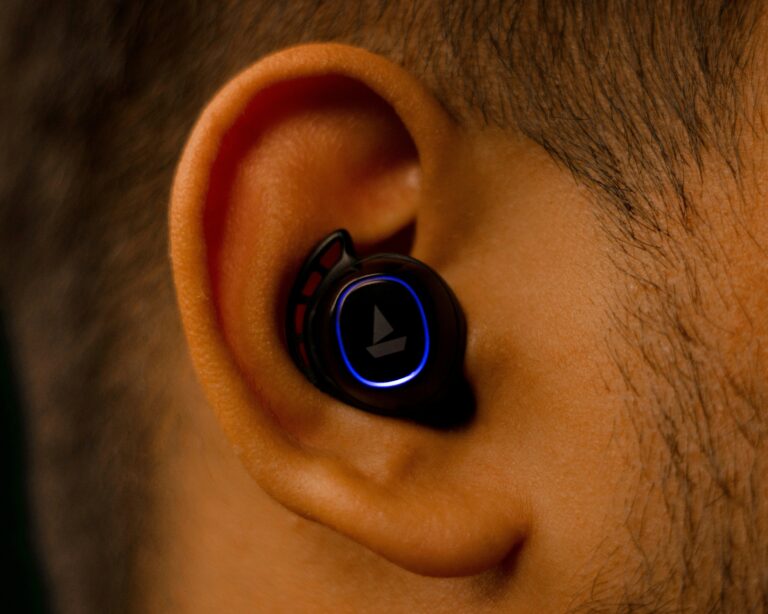
The Fact: Modern hearing technology is nearly invisible. Some devices sit entirely inside the ear canal, while others are so slim they disappear behind the ear. Even better, they now function like high-tech “wearables.” Many can stream phone calls, music, and TV dialogue directly to your ears via Bluetooth.
In reality, nothing makes a person “look older” more than constantly asking “What?” or nodding at the wrong time during a conversation. Modern devices are sleek, discrete, and incredibly powerful.
4. Myth: “I Can Just Wait Until My Hearing Gets ‘Really’ Bad”
This is one of the most costly hearing loss myths because it ignores how the brain works. Many seniors think, “I can still hear the doorbell, so I’ll wait a few more years.”
The Truth: Hearing happens in the brain, not just the ears. When the brain stops receiving sound signals from the ears, the “hearing centers” in the brain can actually begin to shrink or atrophy. This is called “auditory deprivation.”
The longer you wait, the harder it is for your brain to “relearn” how to process sound once you finally do get help. Research from Johns Hopkins University has shown that even mild, untreated hearing loss can double your risk of dementia. Waiting until it’s “bad enough” can lead to permanent changes in your cognitive health that are much harder to fix later.
5. Myth: “My Hearing Loss is Only in One Ear, So I’m Fine”
We often hear seniors say, “My left ear is great; I just use that one for the phone.” They believe that as long as they have one “good” ear, they don’t need to worry about hearing loss.
The Fact: We are meant to hear in “stereo” for a reason. Binaural hearing (hearing with both ears) allows the brain to:
- Pinpoint Sound: You need both ears to know which direction a car is coming from when you cross the street.
- Filter Noise: Two ears help the brain cancel out background noise and focus on speech.
- Reduce Effort: Using only one ear is exhausting. It leads to “listening fatigue” and headaches by the end of the day.
6. Myth: “Hearing Aids Don’t Work and Are Just a Waste of Money”
You may have a friend who bought a pair of hearing aids and kept them in a drawer because “they didn’t work.” This leads to the myth that the technology is a scam or ineffective.
The Fact: Often, when hearing aids “don’t work,” it’s because they weren’t fitted or programmed correctly for that individual’s specific loss. In the U.S., the landscape changed recently with the introduction of FDA-approved Over-the-Counter (OTC) hearing aids.
These OTC options are much more affordable than traditional prescription models and are perfect for mild-to-moderate loss.
- Recommended: If you are looking for a high-quality, budget-friendly entry point, check out [Top-Rated OTC Hearing Aids for Seniors].
- Tip: Remember that hearing aids require an adjustment period. It takes the brain about 30 to 90 days to get used to hearing the “hum” of the world again.
7. Myth: “It’s Just People Mumbling Nowadays”
“If people would just speak up and stop mumbling, I’d be fine!” This is a classic defense mechanism.
The Fact: Most age-related hearing loss affects high-frequency sounds first. This means you can hear the “volume” of a voice (vowels), but you lose the “clarity” (consonants like S, F, Th, and Sh). When you miss those sharp consonants, speech sounds like a mumble.
It isn’t that people are speaking quieter; it’s that your ears can no longer distinguish the fine details of language. This is a primary sign that you should seek a screening.
If you think your “mumbling” problem might actually be your ears, see How you can Detect Hearing Loss at Home by yourself.

Tips and Best Practices for Navigating the Truth
Breaking free from these hearing loss myths is the first step. Here is how to move forward with confidence:
1. Get a Baseline Test
Even if you think you hear fine, get a “baseline” audiogram at age 60. This gives you a record to compare against in the future.
- Find out where you can get a free hearing test as a senior.
2. Protect What You Have
Don’t let these common hearing loss myths seniors believe stop you from using protection. If you are mowing the lawn or using a loud vacuum, wear earplugs.
- Recommendation: Keep a pair of comfortable, reusable earplugs in your car. [Check Out Our Recommended Senior Ear Protection].
3. Educate Your Family
Share the facts with your spouse and children. When they understand that you aren’t “ignoring” them – but rather struggling with specific frequencies – it reduces frustration for everyone.
4. Stay Socially Active
Isolation is the enemy of hearing. The more you talk and listen, the more you “exercise” your auditory brain. If a room is too noisy, don’t leave – just ask to move to a quieter corner or a booth with a high back.
Differentiating hearing loss myths vs facts for seniors is the first step to take. Knowing what is true and what isn’t will give you a clearer understanding of what to do and how to go about it. Falling for these hearing loss myths can be a costly mistake for your health and your happiness. Whether it’s believing that hearing aids are “ugly” or thinking you can just “wait and see,” these misconceptions keep you isolated from the world you love.
The truth is that modern hearing care is effective, discreet, and vital for your brain health. Don’t let the “Silent Thief” steal another dinner conversation or a grandchild’s secret. Reclaim your hearing today!