Have you ever found yourself nodding along to a conversation, only to realize later that you missed the most important part? Maybe you’ve started avoiding your favorite noisy bistro, or you find the dialogue on your favorite TV show sounds like everyone is whispering through a mouthful of marbles.
If this sounds familiar, it might be time for a professional check-up. While there are many apps and “quick fixes” available online today, determining The Best Hearing Tests for Seniors usually requires a trip to a professional clinic. Hearing health isn’t just about volume; it is about how your brain and ears work together to process the world around you.
In the United States, roughly one in three people between the ages of 65 and 74 has hearing loss, and that number increases as we get older. Taking the step to get tested is one of the most proactive things you can do for your brain health, your mood, and your social life. In this guide, we will walk you through exactly what happens during a professional exam, how to find the best in-person hearing tests for seniors near you, and why a comprehensive evaluation is the only way to get a truly clear picture of your health.
Why In-Person Exams are the Most Accurate Hearing Test for Seniors
With the rise of smartphone apps, it is tempting to think you can skip the clinic. However, when it comes to a medical diagnosis, a professional evaluation remains the most accurate hearing test for seniors.
Unlike a home “screener,” which only checks if you can hear a certain volume, an in-person test performed by an Audiologist (a doctor of hearing) or a Hearing Instrument Specialist (HIS) looks at the physical health of your ear and the complex way your brain interprets speech.
The Benefits of Going In-Person:
- Controlled Environment: Clinics use soundproof booths to ensure that background noise doesn’t interfere with your results.
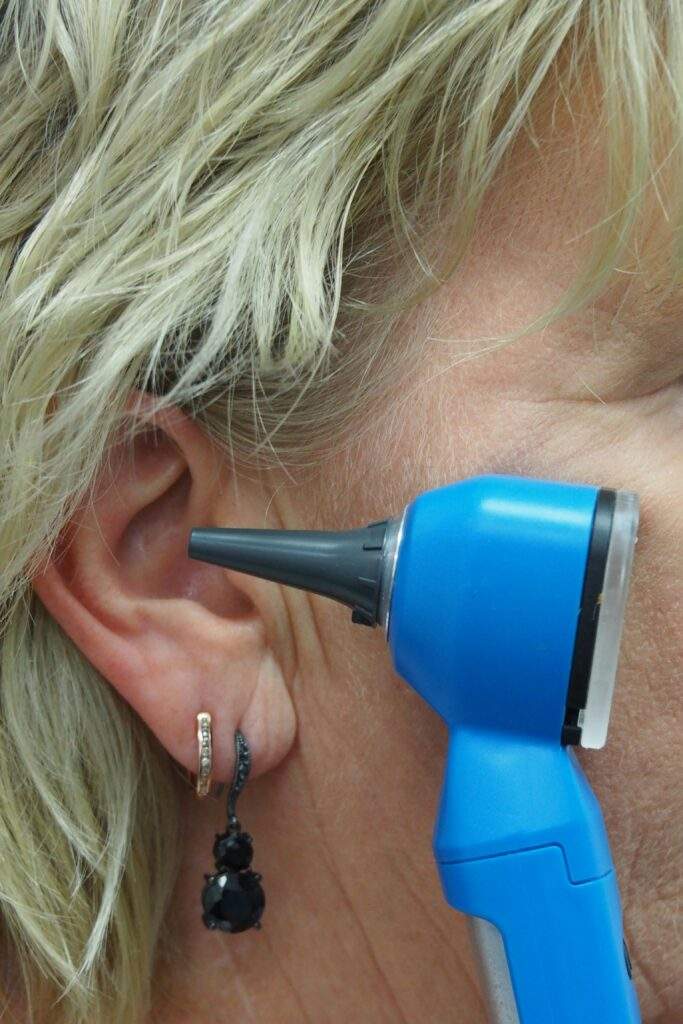
- Physical Inspection: A professional will look inside your ear with an otoscope to ensure your “hearing loss” isn’t actually just a simple buildup of earwax.
- Bone Conduction Testing: This determines if your hearing loss is caused by a problem in the inner ear (the nerve) or the middle ear (the tiny bones), which is vital for choosing the right treatment.
- Expert Consultation: You get to ask questions and receive a personalized plan immediately.
Unsure if you’re ready for a test? Learn how to detect hearing loss at home first by reading our guide: How to Detect Hearing Loss at Home.
What is the Best Hearing Test for Elderly Adults?
If you are wondering, “What is the best hearing test for elderly adults?” the answer is a “Comprehensive Audiological Evaluation.” This isn’t just one test; it is a battery of several small, painless checks that provide a 360-degree view of your hearing health.
1. Pure-Tone Audiometry (The “Beep” Test)
This is the test most people are familiar with. You wear a pair of headphones and raise your hand or press a button every time you hear a beep.
- Why it matters: It identifies the quietest sound you can hear at different pitches (frequencies). Seniors often lose high-pitched sounds first, like birds chirping or the voices of children.
2. Speech Audiometry (The Word Recognition Test)
This is arguably the most important part of the best hearing tests for seniors. Instead of beeps, you will listen to a series of words and repeat them back.
- Why it matters: This test measures your “speech clarity.” It tells the doctor if your brain can still distinguish between similar-sounding words like “cat” and “hat.” This is crucial for hearing tests for seniors with mild hearing loss, as clarity often fades before volume does.
3. Tympanometry (The Pressure Test)
A small probe is placed in the ear canal to change the air pressure slightly.
- Why it matters: It checks how well your eardrum moves and if there is any fluid or “glue ear” behind the drum. This helps rule out infections or physical blockages.
4. Speech-in-Noise Testing
Some clinics use a specialized test where you try to follow a conversation while background noise (like a recording of a busy restaurant) is played.
- Why it matters: This mimics real-life struggles. It is often the deciding factor in whether a senior needs hearing aids even if their “beep test” looks relatively normal.
Finding the Best In-Person Hearing Tests for Seniors Near Me
If you are ready to book an appointment, you might be searching for ‘the best in-person hearing tests for seniors near me’. You have several reputable options:
1. Private Audiology Clinics
These are often the gold standard. Audiologists have advanced degrees and can diagnose complex issues. They often provide the most accurate hearing test for seniors because they look at the medical side of hearing.
2. University Speech and Hearing Centers
If you live near a major university, their speech and hearing department often offers low-cost, high-quality testing performed by graduate students under the supervision of licensed doctors.
3. Hearing Aid Centers (Retail)
Stores like Costco or specialized hearing aid centers often offer free or low-cost screenings. While these are great for basic checks, ensure they are performing a full “audiogram” and not just a quick screening designed to sell a product.
4. The VA (For Veterans)
If you served in the military, the VA provides some of The Best Hearing Tests for Seniors in the country. They are world leaders in hearing research and offer top-tier technology if you qualify for benefits.
Dealing with hearing loss can be stressful. Read about how it affects your mood in our article: Hearing Loss and Depression in Seniors.
Hearing Tests for Seniors with Mild Hearing Loss
It is a common myth that you should “wait until it’s bad” to get a test. In reality, hearing tests for seniors with mild hearing loss are the most important.
Why? Because of “Auditory Deprivation.” When your brain stops hearing certain sounds (like the ‘s’ or ‘th’ in speech), it eventually “forgets” how to process them. If you wait 10 years to get a hearing aid, your brain may no longer know what to do with the sound once it is restored.
Early testing allows you to:
- Protect Brain Function: Study after study shows that treating mild hearing loss can slow down cognitive decline.
- Reduce Fatigue: You might not realize how exhausted you are from “straining” to hear all day.
- Stay Social: It is much easier to adjust to hearing technology when your loss is still mild.
To see how early testing protects your mind, check out what the studies say about Hearing Loss and Dementia here.
Tips and Best Practices for Your Appointment
Walking into a clinic can feel a bit intimidating, but being prepared will help you get the most out of the hearing tests.
1. Bring a “Third Ear”
If possible, bring a spouse, an adult child, or a close friend.
- The Reason: They can help remember the details of the doctor’s advice. More importantly, the audiologist can use your loved one’s voice during the testing process to see how well you hear a familiar person.
2. Clean Your Ears (Safely!)
Do not use Q-tips, but do ensure you don’t have a massive blockage of wax. If you do, the audiologist will have to clear it before they can perform an accurate test.
- Recommended: There are safe options for seniors to use in removing earwax. You could use an electric wax remover that’s designed for seniors, or a wax removal drop
3. Write Down Your “Trouble Spots”
Before the test, make a list. Do you struggle more with men’s or women’s voices? Do you have trouble with the TV? Do you have ringing in your ears (Tinnitus)? This helps the professional tailor the most accurate hearing test for seniors to your specific life.
4. Understand the Audiogram
The result of your test is a graph called an audiogram. Ask the doctor to explain it to you.
- Tip: If the marks are at the top of the graph, your hearing is great. The further down the marks go, the more help you need.
5. Discuss Options (Including OTC)
If your test shows mild to moderate loss, ask the professional if you are a candidate for Over-the-Counter (OTC) hearing aids, which are now FDA-approved and much more affordable.
- If you are looking for high-quality, near-invisible options, check out our review of the Best Hearing Aids for Seniors.
Getting a professional hearing exam is a gift you give to yourself and your family. The Best Hearing Tests for Seniors are painless, quick, and provide the essential data you need to stay connected to the people you love.
Whether you are looking for ‘the best in-person hearing tests for seniors near me’ or you simply want to understand why you are struggling with mild hearing loss, remember that knowledge is power. Once you have your results, the “world of mumbles” disappears, and you can start hearing life in full color again.
Ready to take the next step?
- [Download our Free “Hearing Health” Checklist] – Know exactly what to ask and what to bring.