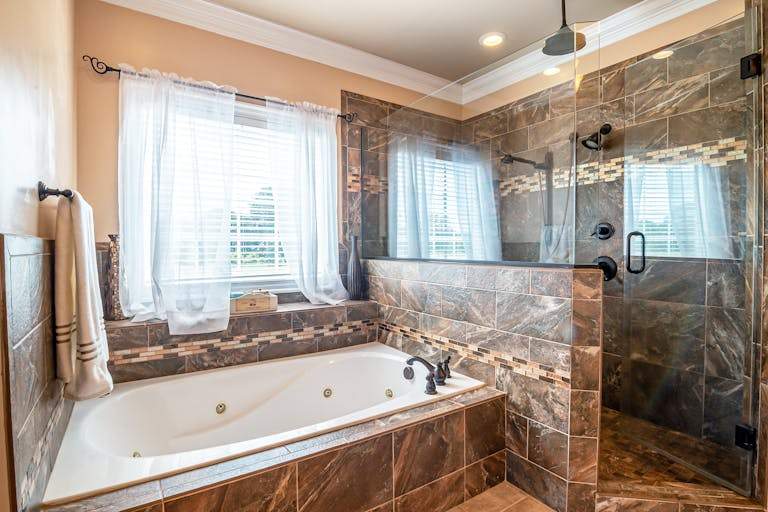
So the contractor handed over the completed bathroom and pointed to the grab bars. “It’s ADA compliant,” he said, with the tone of someone who had just delivered something impressive. The homeowner, a 69-year-old man with moderate arthritis and no disability designation, nodded, not entirely sure what that meant or whether it was actually what he needed. He knew he wanted a bathroom that would continue to work for him as he got older. He didn’t know whether “ADA compliant” was the same thing as that.
It isn’t. And understanding why it isn’t may be one of the most practically useful things you can learn before spending a dollar on aging-in-place home modifications.
This guide explains the universal design vs ADA distinction clearly and completely. By the end, you’ll understand what ADA actually requires and who it applies to, what universal design is and how it differs in both purpose and application, which standard is genuinely more relevant to your home and your aging-in-place goals, and what ADA requirements vs universal design means in practical terms for specific rooms and features. You’ll also know the right questions to ask any contractor who uses these terms.
What the Universal Design vs ADA Distinction Actually Means
This is one of the most commonly confused topics in aging-in-place planning, and the confusion is understandable. Both concepts involve accessible, functional spaces. Both use some of the same design features. Both are invoked regularly by contractors, designers, and product manufacturers. The terms are often used interchangeably, as if they mean the same thing.
They don’t. And the difference between universal design and ADA is not just semantic. It has real consequences for how your home is designed, what it costs, and how well it serves you over time.
What ADA Is and What It Isn’t
The Americans with Disabilities Act (ADA), signed into law in 1990, is a federal civil rights law. Its purpose is to prevent discrimination against people with disabilities in public life, employment, public accommodations, transportation, and government services.
The ADA establishes minimum accessibility standards for covered buildings and facilities. Those standards are specific, measurable, and mandatory for covered entities. A doorway must be at least 32 inches of clear width. A grab bar must be mounted at a height between 33 and 36 inches from the floor. A ramp cannot exceed a 1:12 slope ratio. These are legal requirements with enforcement mechanisms behind them.
Here is the critical point that surprises most homeowners: the ADA does not apply to private residences. Single-family homes and most private multi-family housing are explicitly not covered by ADA requirements. The ADA governs public accommodations like hotels, hospitals, restaurants, government offices, retail stores, and certain types of housing developed with federal funding or falling under specific Fair Housing Act provisions.
When a contractor says your bathroom is “ADA compliant,” they mean it meets the dimensional standards the ADA sets for public accommodations. That may or may not be what your home actually needs.
What Universal Design Is
Universal design is a design philosophy – not a law. It was developed by architect Ronald Mace at North Carolina State University in the 1990s as a framework for creating spaces, products, and environments that work well for people of all ages, sizes, and ability levels from the outset, not retrofitted after the fact.
Universal design does not establish minimums. It establishes aspirations. It asks: how do we design this space so it works beautifully for the widest possible range of people, including those who are aging, those with temporary limitations, those with permanent disabilities, and those with no limitations at all?
This is why the universal design vs ADA for seniors comparison matters so much. ADA compliance is a legal floor, the minimum required to avoid discrimination in a covered setting. Universal design is a design ceiling, the best possible outcome for livability and long-term function in any setting, including your private home.
According to AARP, nearly 90% of adults 65 and older want to remain in their homes as they age. ADA standards were not designed to serve that goal in a private home. Universal design was.
For a comprehensive guide to aging-in-place, including care, technology, finances, and legal documents, see our complete guide to aging in place.
The Key Differences Between Universal Design vs ADA: What They Mean Room by Room
Different Purposes, Different Applications
The difference between universal design and ADA begins with purpose, and that purpose shapes everything downstream.
ADA standards exist to ensure access. They set specific minimums so that a person using a wheelchair can enter a public bathroom, use a toilet, and wash their hands without being physically excluded. The standard is: can this person get in and use the space at all?
Universal design exists to ensure comfort, dignity, and long-term usability. It asks not just whether a person can use a space, but whether they can use it easily, safely, and comfortably today and as their abilities change over time.
This distinction plays out differently in every room.
Bathroom: Where the Difference Is Most Visible
This is where ADA requirements vs universal design explained becomes most concrete for most homeowners.
ADA minimum standards for a public accessible bathroom include:
- At least one accessible toilet stall with specific dimensional requirements
- Grab bars at the toilet at 33–36 inches height, capable of supporting 250 pounds
- Clear floor space of 60 inches minimum turning diameter for wheelchair maneuverability
- Faucet controls operable with one hand without tight grasping or twisting
These standards ensure that a person using a wheelchair can access and use a public bathroom. They are the minimum required by law.
Universal design for a home bathroom asks a different set of questions:
- Will this shower work comfortably for a person who is currently healthy, a person using a shower seat, and a person in a wheelchair without looking like a medical facility?
- Is the toilet at the height that best supports sitting down and standing up for the widest range of body types and mobility levels?
- Will the lighting be adequate at 2 a.m. when someone is less alert and the room is not fully lit?
- Can the space be used comfortably whether the person is 40 and fully mobile or 80 and using a walker?
A bathroom designed to ADA minimums may not address any of those questions. A bathroom designed through a universal design lens addresses all of them and often exceeds ADA dimensional standards in the process, not because the law requires it, but because better design produces better results.
In practice, universal design bathroom features for seniors include:
- A curbless (zero-threshold) shower – easier to enter than any shower with a lip, regardless of mobility level, and cleaner in appearance than a medical-style roll-in shower
- Comfort-height toilet at 17–19 inches – slightly higher than ADA minimum, better suited to the functional needs of most older adults
- Blocking installed in walls during construction so grab bars can be added anywhere in the future without opening walls
- Single-lever faucet controls – meets ADA operability standard and is genuinely easier for arthritic hands
- Non-slip matte tile rather than polished surfaces – not addressed by ADA at all, but critical for safety in a private home
Doorways and Hallways
ADA standard: 32 inches clear width minimum for accessible doors in covered facilities; 36 inches is the preferred standard.
Universal design recommendation: 36 inches clear width for all primary doorways in a home; 42 inches for main hallways where a walker or wheelchair needs to pass easily.
The difference matters practically: a 32-inch clear opening is the minimum a wheelchair can navigate. A 36-inch opening allows a wheelchair user to enter without precise maneuvering. A 42-inch hallway allows two people to pass comfortably, one using a walker, one walking alongside.
ADA builds the floor. Universal design builds for comfort.
Flooring and Transitions
ADA standards address threshold height in accessible routes, a maximum ½-inch vertical change, and slopes must be gradual.
Universal design goes further: flush transitions between all flooring types throughout the home, matte or textured finishes on all hard surfaces, and no area rugs that are not fully secured. These features prevent falls for people across the full ability spectrum, not just those navigating a wheelchair.
The National Institute on Aging (NIA) identifies flooring transitions and loose rugs as among the leading contributors to home falls in older adults. ADA does not address this for private residences. Universal design addresses it directly.
Lighting
ADA standards include specific light level requirements for covered public facilities and specifications for visual contrast in certain settings.
Universal design treats lighting as a whole-home safety system: adequate task lighting in every work area, motion-activated path lighting between bedroom and bathroom, illuminated or rocker-style light switches at consistent heights, and lighting designed to function safely for people with reduced visual acuity, which includes virtually everyone over the age of 70.
None of this is addressed by ADA in a private home. All of it is addressed by universal design.

What “ADA Compliant” Actually Signals and What It Doesn’t
When a contractor tells you something is “ADA compliant,” they are telling you it meets the dimensional minimums developed for public accommodations. That is useful baseline information. It tells you the door is wide enough for a wheelchair, that the grab bar is mounted at the legally specified height, that the faucet can be operated one-handed.
What it does not tell you:
- Whether the space is designed for long-term livability and comfort as you age
- Whether it reflects your specific functional needs and physical dimensions
- Whether it will serve you well at your current level of health and at a future level of reduced mobility
- Whether the design is integrated and visually appropriate for a private home rather than a public facility
Universal design vs ADA for seniors ultimately comes down to this: ADA is the right standard for public buildings and for ensuring legal access. Universal design is the right standard for a private home you want to live in comfortably for the rest of your life.
Why This Matters for Your Renovation Conversations
The practical risk of the confusion between universal design vs ADA is this: a contractor can build you a bathroom that is technically ADA compliant and functionally inadequate for aging in place, and they can do so in good faith, believing they’ve delivered what was asked for.
Knowing the difference protects you. When you speak to a contractor, the right question is not “Is this ADA compliant?” It is: “Does this design reflect universal design principles, and will it continue to serve me safely and comfortably as my needs change?”
A Certified Aging-in-Place Specialist (CAPS) is specifically trained to apply universal design principles, not just ADA minimums, to residential renovation. For any significant home modification project, working with a CAPS professional is the most reliable way to ensure the result genuinely serves your aging-in-place goals. For more on what that credential means and how to find one near you, see our guide to Certified Aging in Place Specialists.
The U.S. Access Board, the federal agency that develops and maintains ADA accessibility guidelines, explicitly acknowledges that its standards represent minimums for covered facilities, not best practices for residential design. The Access Board’s own guidance encourages going beyond minimum standards where resources allow. Universal design is the next step.
For people with progressive conditions such as Parkinson’s disease, MS, or advancing arthritis, the gap between ADA minimums and universal design best practice becomes especially significant. A space that meets ADA minimums may be adequate today and inadequate in two years. A space designed through a universal design lens is built to flex with you. This guide on universal design for aging in place covers those principles in full detail.
What to Do With This Information: Practical Next Steps
- Reframe your renovation conversations with contractors. Stop asking whether a design is “ADA compliant” and start asking whether it reflects universal design principles. Bring specific questions: Is the shower curbless? Does the turning radius allow for a walker? Is blocking installed for future grab bars? These questions signal to your contractor that you understand the distinction and produce better results.
- Evaluate your current home modifications against universal design standards, not ADA minimums. If previous work was done to ADA standards, walk through each modification and ask: Does this actually serve my needs at my current level of function and in the next 10 years? If you find gaps, prioritize addressing them. Use our aging-in-place remodeling checklist to evaluate your home systematically.
- Hire a CAPS professional for any significant renovation. A Certified Aging-in-Place Specialist is trained in universal design principles for residential settings, not just ADA minimums for public facilities. For a bathroom remodel, kitchen modification, or entry renovation, the difference in outcome between a general contractor and a CAPS professional is significant and documented.
- Request universal design specifications in writing before any project begins. Ask your contractor to specify which universal design principles the project addresses, not just whether dimensions meet ADA standards. A written scope that includes curbless shower entry, comfort-height fixtures, and future-ready grab bar blocking is a fundamentally different document than one that says “ADA-compliant bathroom.”
- Consider a professional home assessment before committing to a renovation plan. A licensed occupational therapist (OT) can evaluate your home against your specific functional needs, and against universal design standards and produce a prioritized modification list that is genuinely tailored to you. Ask your physician for a referral or contact your local Area Agency on Aging
When to See a Specialist
For straightforward modifications like grab bar installation, lever handle replacement, and threshold ramp, a CAPS-certified contractor is the right professional.
For complex renovations, significant structural changes, or situations involving a progressive condition, two professionals are worth engaging:
A licensed occupational therapist (OT) assesses your specific functional capacity and translates it into modification recommendations grounded in universal design principles. This is especially important when a progressive neurological condition, significant arthritis, or post-stroke recovery means your needs will change over time.
A licensed architect with accessibility specialization is appropriate when structural changes like load-bearing wall modifications, additions, or major layout changes are part of the scope. For residential projects, look for architects with experience in aging-in-place design specifically, not just general residential work.
Questions to bring to your first consultation:
- What universal design features would you recommend for my specific situation, beyond what ADA standards require?
- Which modifications would serve me both now and if my mobility were to decrease significantly in the next five to ten years?
For broader guidance on the healthcare professionals involved in aging-in-place planning, the complete guide to aging in place covers the full landscape.
A Note for Family Members and Caregivers
If you’re helping a parent plan home modifications, this distinction gives you a practical tool for evaluating contractor proposals. When a contractor presents a design as “ADA compliant,” you now know to ask the follow-up question: does it reflect universal design principles?
The gap between those two standards is often where the budget gets spent on modifications that look appropriate but don’t fully serve the person’s actual needs. A bathroom that is technically ADA compliant but lacks a curbless shower entry, a comfort-height toilet, or adequate nighttime lighting may be a missed opportunity, especially if the walls won’t need to be opened again for years.
For guidance on how to support a parent through renovation planning conversations that involve competing priorities and budget constraints, see our resources on [building a care and support system].
The Bottom Line on Universal Design vs ADA
The universal design vs ADA distinction is not technical trivia; it is the foundation of a smart aging-in-place renovation decision. ADA sets legal minimums for public buildings. Universal design sets the standard for a private home built to serve you well for life.
For your home, the relevant standard is universal design always. ADA compliance in a private home tells you that dimensions are adequate. Universal design tells you the space has been genuinely thought through for long-term livability, comfort, and safety as you age.
When you hear “ADA compliant,” ask the follow-up question. When you hire a contractor, ask for universal design. When you evaluate a completed project, measure it against how well it will serve you in ten years, not just today.
Your next step: For the complete room-by-room guideline of universal design principles applied to a real home, with specific features, costs, and priority guidance, our guide to universal design for aging in place covers everything you need to turn this understanding into a concrete renovation plan.
You’ve asked the right question by understanding this distinction; it’s the kind of knowledge that protects both your safety and your renovation budget for years to come.