The fall happened at 6:47 in the morning. She had lived in the same house for 31 years and used that bathroom every single day. But the floor was wet, the tub ledge was high, and there was nothing solid within reach when her foot slipped. The paramedics were kind. The hip fracture healed. But the bathroom, unchanged in three decades, had never been designed for this stage of her life.
That story is not unusual. It is, in fact, one of the most common injury scenarios for older adults in America. And almost every time, it was preventable.
Bathroom modifications for aging in place are among the highest-value investments you can make in your home, for safety, for independence, and for genuine peace of mind. This guide covers every meaningful modification available, from a $50 grab bar installation to a $20,000 full bathroom conversion. By the end, you’ll know exactly which bathroom modifications for seniors matter most, what each one costs, which ones Medicare may cover, how to sequence your spending, and what to insist on when you hire a contractor.
Why the Bathroom Demands Your First Attention
The bathroom is the most ‘dangerous’ room in the home for older adults, and by a significant margin. The Centers for Disease Control and Prevention (CDC) reports that approximately 36 million falls occur among adults 65 and older each year in the United States, with bathroom falls representing a disproportionate share of fall-related emergency room visits and hospitalizations.
The reason is straightforward: the bathroom combines every known fall risk factor in a single small space. Wet, slippery surfaces. Confined quarters that limit recovery space when balance falters. The physical demands of lowering onto and rising from a toilet, and stepping over a tub ledge. Low lighting for nighttime use. And for most people, no assistive features whatsoever, because the bathroom was built when nobody was thinking about any of this.
The American Journal of Preventive Medicine has documented that bathroom modifications – grab bars in particular – are among the most effective structural interventions for preventing falls in the home. Yet AARP research consistently shows that a majority of older adults’ bathrooms lack even the most basic safety features.
Here is what makes this both frustrating and encouraging: the bathroom modifications for aging in place that would prevent most bathroom falls are not expensive, not complicated, and not aesthetically disruptive. A three-bar grab bar installation professionally done costs $300 to $500. That is about the cost of a single night in a hospital, with a fraction of the disruption.
Understanding how to make a bathroom safe for seniors doesn’t require a full renovation. It requires knowing which bathroom modifications for aging in place matter most, in what order, and what each one actually involves. That is precisely what this guide provides.
For the full guide on aging-in-place planning covering home modifications alongside care, technology, finances, and legal planning, see our complete guide to aging in place.
The Complete Guide to Bathroom Modifications for Aging in Place
Grab Bars: The Single Most Important Modification
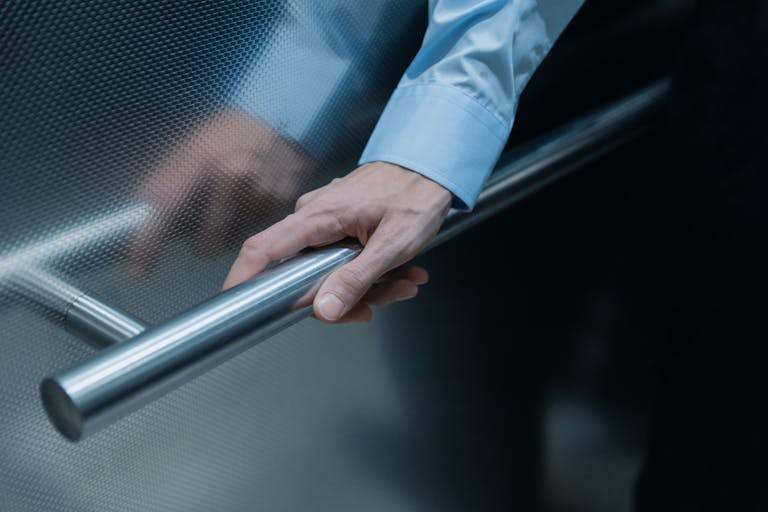
If you take nothing else from this guide, take this: installing grab bars is the most impactful, most evidence-based, and most cost-effective bathroom modification for elderly safety at home. Nothing else in the bathroom delivers comparable fall prevention return per dollar spent.
Grab bars provide a stable, weight-bearing surface to grip during the movements most likely to cause a fall: stepping into and out of the shower, lowering onto and rising from the toilet, and recovering balance on a wet floor.
Where grab bars belong:
- Inside the shower or tub — on the wall opposite the showerhead for stability while bathing, and on the entry wall to support stepping in and out
- Beside the toilet — on the dominant-hand wall, positioned to support both lowering down and standing up
- At the tub rim — if a standard tub is retained, a bar at the rim aids the step-over movement
What correct installation looks like: Grab bars must be anchored to wall studs – the structural framing behind the drywall – or to solid blocking installed between studs. A bar anchored to drywall alone will pull out of the wall under the load of a falling adult. This is not a hypothetical risk. It happens regularly, and it causes serious injury.
The towel bar problem: Many people instinctively grab the towel bar when they feel unsteady. Towel bars are not engineered to bear human weight. They are anchored for towels – typically 5 to 10 pounds – not for a person. If your bathroom has towel bars where grab bars should be, replacing them with properly installed grab bars in those same locations is an urgent priority.
Cost: $75–$200 per bar installed professionally. A complete bathroom setup of three bars typically runs $250–$500, including hardware and labor. For homes where the walls have not yet been opened, installing blocking (a reinforced wood panel behind the drywall) during any renovation allows grab bars to be added anywhere later without reopening the wall. This is a low-cost upgrade during renovation that eliminates significant cost later.
One note on aesthetics: Modern grab bars are available in brushed nickel, oil-rubbed bronze, matte black, and other finishes that coordinate with bathroom hardware. A well-chosen grab bar looks intentional. It does not look clinical.
Shower Modifications: From Simple to Comprehensive
After grab bars, shower modifications for aging in place represent the highest-return investments for most homeowners. The specific modifications appropriate for your bathroom depend on what you currently have and what your budget allows.
Non-Slip Shower Floor
The shower floor is where the highest concentration of fall risk exists. Non-slip modifications include:
- Adhesive non-slip strips applied directly to existing tile — the lowest-cost option at $15–$50
- Non-slip shower mat with suction base — $20–$80, but must be lifted and dried after each use to prevent mold
- Textured tile replacement — more durable, more attractive, and more effective. Matte or stone-finish tile provides significantly better traction than polished or glazed surfaces
Cost: $15–$50 for adhesive strips; $500–$2,000 for professional tile replacement in a standard shower floor.
Handheld Showerhead With Adjustable Slide Bar
A handheld showerhead on an adjustable slide bar is among the most versatile and undervalued bathroom modifications for seniors. It allows bathing while seated, directed rinsing without moving into the spray, and height adjustment for users of any stature.
Look for a slide bar that allows the showerhead to be positioned anywhere from seated height to standing height, which is typically 18 to 72 inches off the floor. Single-lever temperature control on the showerhead itself simplifies operation for arthritic hands.
Cost: $80–$300 installed, depending on the unit and whether existing plumbing accommodates a straightforward swap.
Fold-Down Shower Seat or Transfer Bench
A shower seat allows bathing in a seated position, reducing fatigue, lowering fall risk, and making showering manageable for people with balance issues, lower-limb weakness, or recovery from surgery.
Two primary options:
Fold-down wall-mounted seat: Folds flat against the wall when not in use, freeing floor space. Requires installation into studs or blocking. Teak and teak-style models are visually attractive and resist moisture well. Cost: $150–$600 installed.
Transfer bench: A bench that spans from outside the tub or shower to inside it, allowing someone to sit on the outside edge, slide across, and lift their legs in, eliminating the need to step over any threshold. Particularly useful for tub-shower combos where full conversion is not yet planned. Cost: $50–$200, no installation required for most models.
Walk-In Shower Conversion
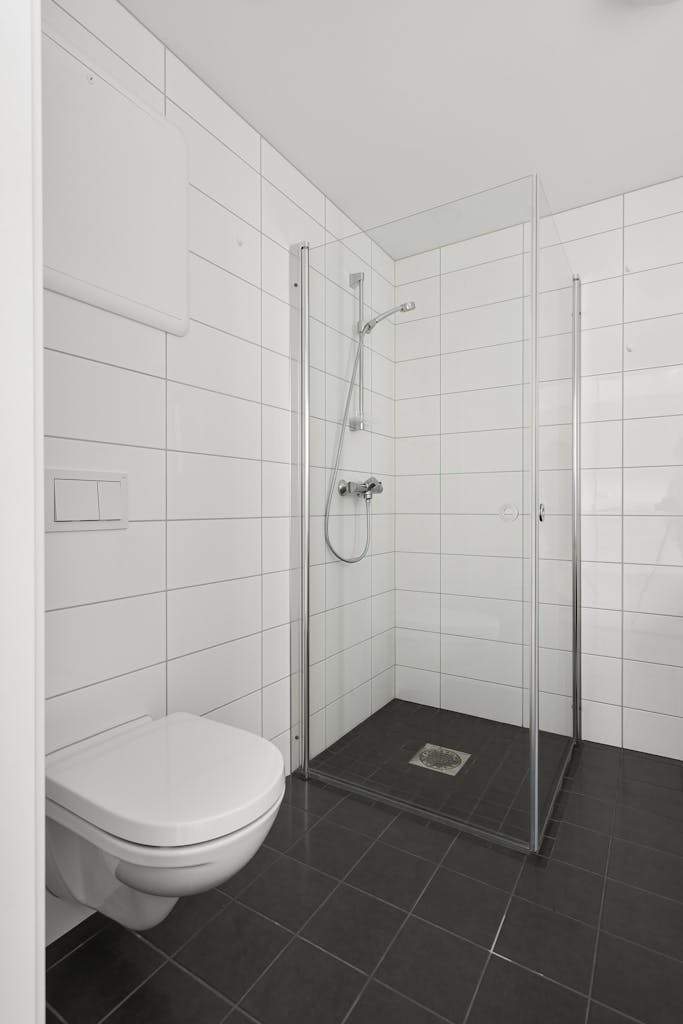
The most impactful single shower modification, and the one with the highest cost, is converting a step-over tub-shower to a curbless (zero-threshold) walk-in shower. There is no ledge to step over. Entry is level with the bathroom floor. With a fold-down seat and grab bars, the same shower works equally well for a 45-year-old standing and a 90-year-old seated.
Beyond pure safety, a curbless walk-in shower is the defining feature of universal design bathroom modification; it looks like a contemporary spa feature, not a medical accommodation.
Cost ranges:
- Standard tub-to-shower conversion (with threshold): $1,500–$4,000
- Curbless walk-in shower conversion (full): $5,000–$15,000 depending on size, materials, and wall work required
- Full accessible bathroom renovation including curbless shower, updated fixtures, and grab bars: $10,000–$25,000+
For a complete understanding of how walk-in shower conversion fits within broader home modification costs and sequencing, see our guide to aging in place remodeling costs.
Toilet Modifications: Often Overlooked, Highly Impactful
The toilet is the second major fall site in the bathroom. Rising from a standard toilet requires significant quadriceps strength and balance, both of which decline with age. Toilet modifications for seniors address this directly.
Comfort-Height Toilet
A comfort-height toilet – sometimes called an ADA-height toilet – sits at 17 to 19 inches from floor to seat, compared to 15 inches for a standard toilet. That 2 to 4 inch difference is meaningful. It reduces the distance the body must lower and the effort required to stand.
For most adults over 65, especially those with arthritis, joint replacement history, or lower-limb weakness, a comfort-height toilet is one of the best-value modifications in the entire bathroom.
Cost: $300–$800 installed, including the toilet and labor for swapping the existing unit.
Raised Toilet Seat
If toilet replacement is not currently in the budget, a raised toilet seat usually a clamp-on adapter that adds 2 to 6 inches of height, provides similar functional benefit at a fraction of the cost.
Look for models with integrated armrests, which provide the same push-up support as a properly placed grab bar and add stability during the transfer on and off.
Cost: $30–$120. No installation required for most models.
Toilet Safety Frame
A toilet safety frame, which is a freestanding frame that brackets the toilet and provides bilateral armrests, is a middle-ground option between a raised seat and a full grab bar installation. It is less permanent than a wall-mounted grab bar but more supportive than a raised seat alone.
Cost: $50–$150. No installation required.
The best permanent solution: A comfort-height toilet combined with a wall-mounted grab bar on the dominant-hand side. The grab bar provides the most reliable pull-up support; the toilet height reduces the range of motion required for the transfer.
Flooring: The Most Overlooked Fall-Prevention Modification
Bathroom flooring is where the best bathroom modifications for elderly safety at home are most commonly skipped because the risk is invisible until it isn’t.
High-gloss polished tile – the standard in many bathrooms built in the 1980s through 2000s – becomes a serious slip hazard when wet. The solution is not a bath mat. Bath mats that are not fully secured become trip hazards of their own.
The right flooring solution:
- Matte or textured ceramic tile – slip-resistant by surface finish, durable, easy to clean, and available in visually attractive designs. This is the best permanent solution for a bathroom floor being renovated.
- Non-slip coating applied to existing tile. It’s a professional-grade treatment that increases traction on existing polished surfaces. Less durable than tile replacement but significantly less expensive.
- Luxury vinyl plank (LVP) with textured finish. It’s a waterproof, non-slip flooring option that is more affordable than tile and easier to install. Cost: $3–$8 per square foot in materials, plus installation.
Cost for bathroom floor re-tiling (average bathroom, 50 sq ft): $800–$2,500, depending on tile selection and whether existing tile requires removal.
Door Modifications: The Safety Detail Most People Miss
Two bathroom door issues significantly affect both safety and emergency access, and both are commonly overlooked.
Door Direction
A bathroom door that opens inward creates a rescue problem. If someone falls against the door, emergency responders cannot open it from the outside to reach them. Rehanging an inward-opening door to swing outward is a straightforward carpentry job.
Alternatively: Converting to a sliding pocket door or barn door eliminates the swing issue entirely, adds 3 to 4 feet of usable floor space in a small bathroom, and often improves the room’s visual spaciousness.
Cost: $200–$600 to rehang inward-opening door; $800–$2,500 for pocket door conversion.
Door Width
Standard interior doors are 28 to 30 inches wide and are too narrow for a walker or wheelchair. A 36-inch clear opening is the universal design standard for accessibility. Widening a doorway requires opening the wall framing, which is more involved than surface modifications, but is relatively straightforward in a non-load-bearing wall.
Cost: $700–$2,500 for a standard doorway widening in a non-load-bearing wall.
Lighting: The Modification That Costs Almost Nothing and Prevents Real Harm
Poor bathroom lighting, especially at night, is an independent fall risk factor. The path from bed to bathroom at 2 a.m. involves a person who is less alert, possibly less steady, and navigating in low light.
Lighting modifications for bathroom safety:
- Nightlight in the bathroom – a plug-in motion-activated nightlight that illuminates automatically. Cost: $10–$25.
- Motion-activated pathway lighting in the hallway between bedroom and bathroom. Cost: $30–$100.
- Vanity lighting upgrade – adequate illumination at the mirror and over the shower reduces the risk of misjudging depth and distance. Cost: $150–$500 installed.
- Illuminated light switch – glows in the dark, so the switch is visible without turning on a ceiling light. Cost: $15–$30 per switch.
The National Institute on Aging (NIA) specifically identifies poor lighting as a modifiable fall risk factor in the home, and bathroom lighting improvements are among the lowest-cost, highest-impact modifications available.
Faucet and Fixture Controls
Arthritic hands, reduced grip strength, and sensory changes affect how easy it is to operate standard bathroom fixtures. Fixture modifications for bathroom safety include:
- Single-lever faucet controls replace separate hot and cold handles operable with one hand, no tight grasping or twisting required. Cost: $150–$500 installed.
- Touchless faucets operated by a motion sensor. Cost: $200–$600 installed.
- Thermostatic mixing valve preset to a maximum safe temperature, preventing scalding from sudden hot water surges. Particularly important for people with reduced sensation in their hands or feet. Cost: $300–$800 installed.
- Lever-style shower controls replacing round knobs. Cost: $100–$300.
A Sequenced Priority Plan for Bathroom Modifications
Not every modification needs to happen at once. This sequence reflects safety impact and cost-effectiveness:
Immediate priority (do this first, regardless of other plans):
- Professional grab bar installation — toilet and shower ($250–$500)
- Non-slip treatment for shower floor ($15–$300)
- Remove or fully secure any bath mats not anchored at all edges ($0–$50)
- Install bathroom nightlight ($10–$25)
Near-term priority (within the next 6 to 12 months):
- Comfort-height toilet or raised toilet seat ($30–$800)
- Handheld showerhead with slide bar ($80–$300)
- Bathroom door direction or width assessment
Longer-term renovation planning:
- Curbless walk-in shower conversion ($5,000–$15,000)
- Full flooring replacement with non-slip tile ($800–$2,500)
- Full accessible bathroom renovation ($10,000–$25,000)
What to Do With This Information: Practical Next Steps
- Install grab bars this month — before any other project. Contact a CAPS-certified contractor or an experienced licensed handyman and schedule grab bar installation at the toilet and inside the shower. This is your highest-impact, lowest-cost action. Don’t let planning for larger projects delay it.
- Assess your shower floor and remove unsecured bath mats today. Add non-slip adhesive strips to your shower floor if you don’t have textured tile. This costs under $30 and addresses a fall risk that exists every time you shower.
- Contact Medicare before any significant purchase. If you are enrolled in Medicare, contact Medicare before purchasing any shower chair, transfer bench, or related equipment. Some durable medical equipment (DME) may be covered under your plan. For details on what Medicare does and doesn’t cover, see this guide.
- Schedule a professional OT home assessment before committing to a full renovation. A licensed occupational therapist can evaluate your specific functional abilities against your bathroom’s current layout and prioritize modifications tailored to you, not a generic checklist. Ask your physician for a referral or contact your local Area Agency on Aging
- Time larger modifications with any planned renovation. If a bathroom remodel is on your horizon for any reason – cosmetic updates, plumbing repair, tile replacement – incorporate bathroom modifications for aging in place into that project now. The cost of including a curbless shower conversion during a scheduled remodel is far less than returning to open the same walls again later.
When to See a Specialist
For grab bars, non-slip strips, and raised toilet seats, a licensed handyman with stud-anchoring experience is adequate.
For anything involving tile, plumbing, structural wall work, or a curbless shower conversion, you need two professionals:
A licensed occupational therapist (OT) assesses your specific physical capabilities and translates them into a modification plan tailored to your body, your balance, and your likely trajectory. This is especially important for people with progressive conditions like Parkinson’s disease, advancing arthritis, and post-stroke recovery, where needs will change over time.
A Certified Aging-in-Place Specialist (CAPS) applies universal design principles to the execution of modifications. They understand how grab bar height should relate to your specific body dimensions, why curbless shower slope must be precise, and how to integrate safety features into a bathroom that still looks like a home.
Questions to bring to your first professional consultation:
- Given my current physical condition and trajectory, which bathroom modifications for aging in place should I prioritize in the next 12 months?
- Should I invest in a curbless shower conversion now, or can we phase this modification safely?
For guidance on working with healthcare professionals in the context of your broader aging-in-place plan, see the complete guide to aging in place.
A Note for Family Members and Caregivers
If you’re helping a parent address bathroom safety, lead with specifics rather than general concern. “I’d like to arrange to have grab bars installed beside the toilet and in the shower” is a different conversation than “I’m worried the bathroom isn’t safe.” The first is a plan. The second can feel like a critique.
Bring pictures of well-designed bathrooms with integrated grab bars that are modern, attractive spaces that don’t look institutional. Show your parents what’s possible. The resistance many older adults feel toward modifications dissolves significantly when they see that safety and aesthetics are not in conflict.
If a parent has already had a fall in the bathroom, even a minor one, treat that as the signal to act on the immediate priority list above before any other conversation happens.
For broader guidance on supporting a parent through aging-in-place home planning, see our resources on [building a care and support system].
The Most Important Things to Remember
Bathroom modifications for aging in place do not require a full renovation to be effective. The modifications that prevent most bathroom falls – grab bars, non-slip surfaces, and nightlighting – cost under $600 combined and can be completed in a single afternoon.
The bathroom is where the greatest fall risk lives, and where the return on investment on bathroom modifications for aging in place is clearest. Start with the immediate priorities. Build toward the larger modifications as budget and timing allow. Do not let the size of the eventual project delay the safety improvements your bathroom needs right now.
The best bathroom modifications for elderly safety at home are the ones that actually get done, not the ones sitting in a drawer in an envelope marked with a contractor’s estimate.
Your next step: Before you plan any bathroom renovation, make sure you have a complete picture of your home’s full modification needs, not just the bathroom. Our complete aging in place remodeling checklist walks through every room, every category, and every priority so your bathroom modifications fit into a coherent whole-home plan.
You’ve taken the right first step by understanding what your bathroom actually needs, and that knowledge is what turns intention into real, lasting safety.