Walk-In Showers vs. Walk-In Tubs: Which Is Better for Seniors
This post contains affiliate links. If you purchase through our links, we may earn a small commission at no extra cost to you. Our comparisons are editorially independent – we evaluate both options honestly and recommend based on what genuinely serves our readers.
The decision between walk-in showers vs walk-in tubs is one of the most significant bathroom renovation choices an older adult can make, and it is genuinely difficult because both options solve a real problem while creating trade-offs the other doesn’t have. A walk-in shower eliminates the step-over hazard and creates the most accessible bathing space available. A walk-in tub eliminates the step-over hazard while preserving the soaking bath that many people depend on for pain management and daily comfort. Neither is universally right. Both are significantly better than a standard tub-shower combo for most seniors.
This guide compares the two options across every dimension that matters to an older adult making a permanent bathroom renovation decision: safety, ease of use, cost, installation requirements, mobility demands, long-term suitability, and resale impact. By the end, you will know which option fits your situation and why.
Decision Summary
| Walk-In Shower | Walk-In Tub | |
|---|---|---|
| Overall Safety | ⭐⭐⭐⭐⭐ Excellent | ⭐⭐⭐⭐ Very Good |
| Ease of Daily Use | ⭐⭐⭐⭐⭐ Highest | ⭐⭐⭐ Moderate |
| Cost Range (installed) | $3,000–$15,000 | $5,000–$20,000 |
| Best For | Most seniors, especially those with balance or mobility concerns | Seniors who need hydrotherapy or strongly prefer soaking baths |
| Not Ideal For | Those who require soaking for chronic pain management | Those with significant cognitive decline or limited physical strength |
| Bottom Line | The safer, more accessible, and more versatile choice for the majority | A legitimate option for the right buyer, but not the default recommendation |
→ [View walk-in shower conversion options] → [Check current walk-in tub pricing and availability]
What You Are Actually Comparing
Both walk-in showers and walk-in tubs solve the same primary problem: they eliminate the step-over threshold of a standard bathtub, one of the leading causes of bathroom falls among older adults. That shared solution is why they are frequently compared, and why the comparison matters.
Beyond that shared feature, they are fundamentally different products serving somewhat different needs.
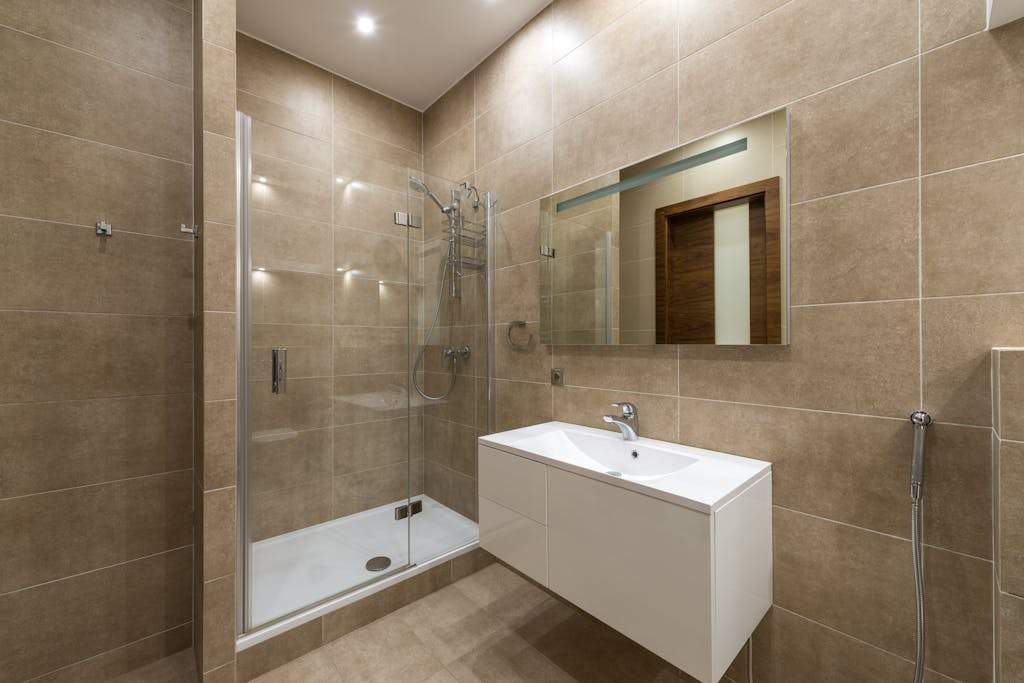
A walk-in shower, specifically a curbless or zero-threshold walk-in shower, has no barrier at all between the bathroom floor and the shower floor. You walk in on a level surface. With a fold-down seat and grab bars, the same shower works equally well for a 60-year-old standing and an 85-year-old seated. It is, by design, the most accessible bathing option available.
A walk-in tub is a bathtub with a door built into the side wall. You open the door, step over a low (typically 2–4 inch) threshold, sit down inside the tub, close the door, and then fill the tub with water. Most models include hydrotherapy jets, heated seat options, and various comfort features. The bathing experience is fundamentally different from a shower; it is an immersive soak.
The comparison is not between equivalent products with different features. It is between two different bathing philosophies, and the right choice depends on which one serves your actual daily bathing needs and physical capabilities.
For the complete guide to bathroom safety modifications, including grab bars, toilet height, flooring, and lighting, see our complete guide to bathroom modifications for aging in place.
Head-to-Head Comparison: Walk-In Showers vs. Walk-In Tubs
Safety During Entry and Exit
Walk-in showers are meaningfully safer for entry and exit than walk-in tubs, and this difference is significant enough to be the decisive criterion for many buyers.
A curbless walk-in shower has zero threshold. There is nothing to step over, nothing to catch a toe on, and no balance demand at the point of entry. Combined with grab bars at the entry point and inside the shower, entry and exit involve no moment of single-leg balance whatsoever. The Centers for Disease Control and Prevention (CDC) identifies bathroom falls as a leading cause of injury-related hospitalization among older adults, and the step-over moment at tub entry is one of the highest-risk actions in the bathroom.
A walk-in tub still requires a threshold step, typically 2–4 inches. That is dramatically lower than a standard tub’s 14–18 inch step-over, but it is not zero. More significantly, the walk-in tub’s entry sequence introduces a specific risk that the walk-in shower does not: you must enter the tub and sit down before filling it with water, and you cannot exit until the tub has drained after bathing. That drainage wait – typically 3–5 minutes for a standard walk-in tub – means you are sitting in a cooling, potentially chilling tub waiting to be able to exit. For seniors with circulation issues, cold sensitivity, or Parkinson’s disease, this wait period is a genuine safety and comfort concern.
For seniors with significant balance concerns, fall history, or progressive mobility conditions, this criterion alone often determines the choice. The walk-in shower’s zero-threshold entry with no drainage wait is the safer design by a meaningful margin.
Ease of Daily Use
Walk-in showers win on daily use ease for the majority of seniors. Walk-in tubs are easier to use than standard tubs but introduce a specific operational sequence that some users find frustrating.
A curbless walk-in shower with a fold-down seat and handheld showerhead requires minimal physical demand. You enter, sit if needed, bathe, and exit. The entire sequence is straightforward and can be completed quickly. For seniors who bathe daily or multiple times per day in warmer climates, the walk-in shower’s simplicity is a genuine daily quality-of-life advantage.
A walk-in tub requires managing: the door seal (must be properly closed before filling), the fill sequence (entry before water), the drainage sequence (wait after bathing before exit), and the hydrotherapy controls if jets are included. For users who value the soaking experience and manage the sequence comfortably, this is a minor operational reality. For users with cognitive decline, anxiety, or impatience, the sequence, particularly the mandatory drainage wait, can become a source of genuine frustration or even unsafe behavior (attempting to exit before full drainage).
Seniors managing early-stage dementia or cognitive changes should specifically consider this operational sequence before choosing a walk-in tub. The walk-in shower’s simpler, more intuitive use sequence is a meaningful accessibility advantage for this group.
Cost and Total Investment
Walk-in tubs cost more than walk-in showers in most installation scenarios and sometimes significantly more, but the gap is smaller than manufacturer marketing often suggests.
Walk-in shower costs (installed):
- Basic tub-to-shower conversion with threshold: $1,500–$4,000
- Standard curbless walk-in shower conversion: $4,000–$8,000
- Premium curbless conversion with full tile work, bench, and premium fixtures: $8,000–$15,000
Walk-in tub costs (installed):
- Entry-level walk-in tub, basic model: $3,000–$7,000 installed
- Mid-range with air jets and heated seat: $7,000–$12,000 installed
- Premium hydrotherapy models (American Standard, Kohler, Safe Step): $12,000–$20,000 installed
How much are walk-in tubs at the low end? Entry-level units from less established brands start around $1,500–$2,500 for the unit alone, but installation costs for walk-in tubs are typically higher than for walk-in showers because of the plumbing complexity involved (separate fill and drain systems, jet plumbing for hydrotherapy models). Budget for installation to add $1,500–$3,500 to the unit cost, regardless of model.
The total cost comparison: A quality curbless walk-in shower conversion and a quality walk-in tub installation frequently land in overlapping price ranges in the $5,000–$10,000 band. At the premium end, walk-in tubs cost more. At the entry level, costs are comparable. The cost argument alone does not reliably favor either option for the majority of buyers.
Insurance and financing: Medicare does not cover either option as a standard benefit. Some Medicare Advantage plans include home modification benefits. Check your specific plan. Veterans may qualify for VA home modification grants (SAH/SHA programs) that can cover either option. Many walk-in tub manufacturers offer financing, which can make the higher upfront cost more manageable, but read financing terms carefully, as some deals include significant interest costs or prepayment penalties.
Long-Term Suitability as Mobility Changes
Walk-in showers adapt more flexibly to progressive mobility changes than walk-in tubs, and this is a significant planning consideration for anyone with a condition that is likely to progress.
A curbless walk-in shower can accommodate: independent standing bathing today, seated shower with a bench in two years, assisted bathing with a caregiver in five years, and wheelchair-accessible bathing if needed, all within the same physical space, with only equipment additions (a shower chair, a different showerhead height), not structural changes.
A walk-in tub is designed for a specific mobility profile: able to enter independently, sit down and rise independently, manage the door seal and controls independently. As mobility declines, that profile becomes harder to maintain. A user who can no longer safely manage the entry-sit-fill-wait-drain-exit sequence without assistance loses most of the operational benefit of the walk-in tub. At that point, the tub becomes an obstacle rather than an accommodation, and it cannot easily be converted back to a usable shower without significant additional renovation cost.
For seniors with progressive conditions like Parkinson’s disease, advancing arthritis, MS, or post-stroke recovery, the walk-in shower’s adaptability over time is a meaningful planning advantage. The American Occupational Therapy Association (AOTA) specifically recommends anticipating future mobility needs, not just current ones, when selecting bathroom modifications.
Hydrotherapy and Pain Management Value
This is the criterion where walk-in tubs offer a genuine, meaningful advantage, and for the right buyer, it can be decisive.
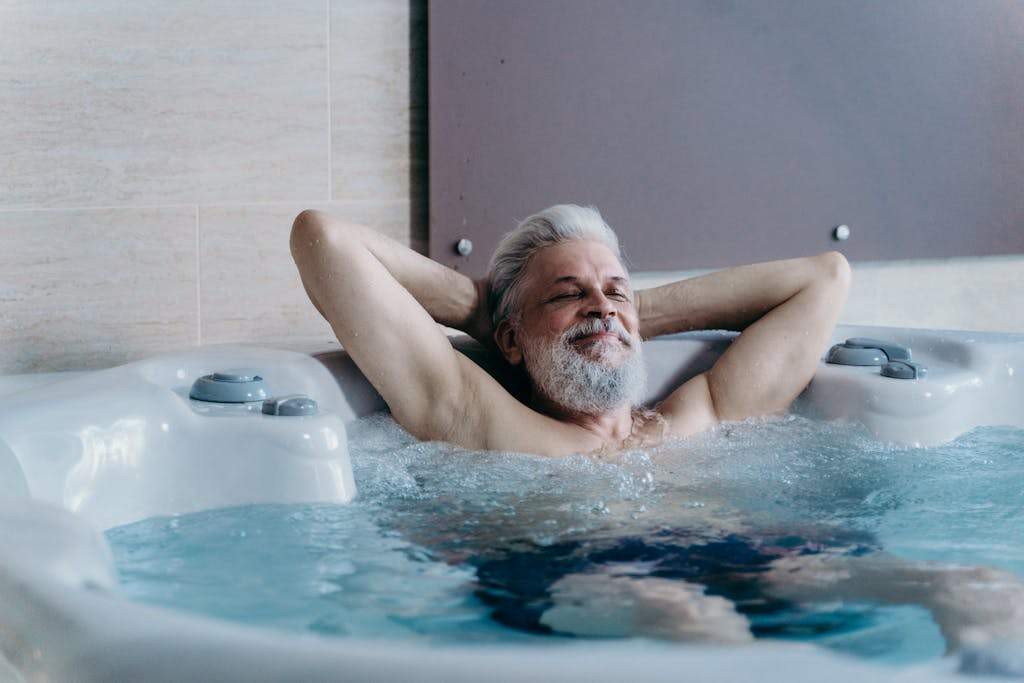
Many seniors use soaking baths as a primary tool for managing chronic pain conditions: arthritis, fibromyalgia, lower back pain, and joint pain following replacement surgery. Hot water immersion provides muscle relaxation and temporary pain relief that a shower, even a high-quality one, simply cannot replicate. If this describes your daily routine, a walk-in tub addresses a real need, not a preference.
Walk-in tubs for seniors with hydrotherapy jets – air jets, water jets, or combination systems – add therapeutic value beyond standard hot water immersion. Air jet systems (which bubble air through the water) are generally gentler and easier to maintain than water jet systems (which recirculate bath water through jets). For users with skin sensitivity, air jets are the preferred hydrotherapy option.
A walk-in shower cannot provide this benefit. A high-quality showerhead with adjustable spray settings provides some muscle relaxation benefit, but it is not equivalent to full water immersion for pain management purposes. This is not a minor difference for a buyer who relies on a soaking bath as part of their daily pain management routine.
For caregivers helping a parent make this decision: Ask specifically whether your parent currently takes regular soaking baths and whether they report pain relief benefits from doing so. If the answer is yes, dismissing the walk-in tub in favor of the objectively “safer” shower option may result in a modification that reduces pain management quality and a parent who is less compliant with bathing routines as a result. Safety and quality of life are both legitimate priorities.
Installation Complexity and Timeline
Walk-in shower conversions are generally faster to complete and involve less plumbing complexity than walk-in tub installations, and that’s a practical consideration if you are planning the renovation while still using the bathroom daily.
A standard curbless walk-in shower conversion typically takes 3–7 days of active work. The primary tasks are removing the existing tub, preparing the shower pan or installing a curbless drain system, tiling or installing a prefabricated surround, and adding fixtures. Plumbing changes are relatively straightforward in most homes.
A walk-in tub installation involves: removing the existing tub, installing the new unit (which is typically heavier and bulkier than a standard tub), connecting dedicated fill and drain plumbing, and, if jets are included, connecting the jet motor system. For hydrotherapy models with heated seats or in-line heaters, electrical work is also required. Total installation time is typically 4–10 days for a full installation.
The higher installation complexity of walk-in tubs also means a higher sensitivity to installation quality. A walk-in tub installed by a contractor without specific experience in the product can result in door seal problems, drainage issues, or jet system failures that are expensive and disruptive to repair. For walk-in tub installation, using a contractor certified or recommended by the tub manufacturer or a CAPS professional with specific walk-in tub experience is more important than for a standard walk-in shower conversion.
Resale Impact on Home Value
Both options add value relative to a non-modified bathroom for buyers who need accessibility features. Walk-in showers generally have a broader appeal and are less likely to be seen as a negative by buyers who don’t need accessibility features.
A beautifully executed curbless walk-in shower is a mainstream luxury bathroom feature; it appeals to buyers of all ages. A walk-in tub, while valuable to buyers who need it, is sometimes perceived by non-senior buyers as a feature that will need to be removed. The resale impact is genuinely situation-dependent in a market with a high proportion of older buyers; a walk-in tub can be a positive differentiator. In a market with younger buyers, it can be a modest negative.
For most homeowners prioritizing long-term use over resale optimization, this criterion is relatively minor. For homeowners who may sell within 5–7 years, the walk-in shower’s broader market appeal is worth factoring in.
Side-by-Side Comparison Summary
| Criterion | Walk-In Shower | Walk-In Tub |
|---|---|---|
| Entry/Exit Safety | ✅ Zero threshold, no drainage wait | ⚠️ 2–4″ threshold, drainage wait required |
| Daily Use Ease | ✅ Simple, intuitive sequence | ⚠️ Multi-step sequence, requires planning |
| Cost (installed) | $3,000–$15,000 | $5,000–$20,000 |
| Long-Term Adaptability | ✅ Adapts to progressive mobility change | ⚠️ Limited adaptability as needs change |
| Hydrotherapy Value | ❌ Not available | ✅ Significant for chronic pain management |
| Installation Complexity | Moderate | Higher – plumbing + possible electrical |
| Cognitive Accessibility | ✅ Simple, low-demand sequence | ⚠️ Sequence management required |
| Resale Appeal | ✅ Broad market appeal | ⚠️ Narrower market appeal |
| Insurance/Medicare | ❌ Not typically covered | ❌ Not typically covered |
| Best Safety Profile | Progressive conditions, fall history | Post-surgical recovery, chronic pain |
Who Should Choose Each Option
Choose a Walk-In Shower If:
- You have a history of falls or near-falls in the bathroom – the zero-threshold entry eliminates the highest-risk moment in a standard bathroom
- You have a progressive condition – Parkinson’s disease, advancing arthritis, MS, or any condition that is likely to affect your mobility over the next 5–10 years
- You bathe daily and want a quick, simple routine – the walk-in shower’s straightforward sequence is meaningfully easier to manage every day
- You use a walker or wheelchair, or anticipate needing one – a properly designed curbless shower is the only bathing space that accommodates all mobility levels without further modification
- You are managing early-stage cognitive changes – the simple, intuitive sequence of a walk-in shower is far more accessible for someone who may find multi-step processes confusing
- You are planning for the long term and want one renovation that serves you across multiple stages of aging – the walk-in shower’s adaptability makes it the better single investment
- You want the broadest possible home resale appeal – a curbless walk-in shower is a mainstream luxury feature; a walk-in tub appeals to a narrower buyer profile
- Your primary concern is safety and fall prevention – on this dimension, the walk-in shower is the stronger choice for most buyers
Choose a Walk-In Tub If:
- You currently take regular soaking baths and rely on them for pain management – arthritis, fibromyalgia, lower back pain, or joint pain that genuinely responds to hot water immersion is a real and valid reason to choose a walk-in tub
- You want hydrotherapy features – air jets or water jets that a shower cannot provide, and you have a condition that benefits from them
- You are making a post-surgical accommodation and anticipate returning to a more active mobility level – a walk-in tub may be appropriate for a transitional period following joint replacement, when soaking is part of recovery
- You have manageable, stable mobility limitations (not progressive conditions) and you can reliably manage the entry-fill-wait-drain-exit sequence independently
- Losing your soaking bath would meaningfully reduce your quality of life – this is a genuine factor, not a minor preference. A modification that solves a safety problem while creating a quality-of-life problem is not necessarily a net improvement.
- You are not managing significant cognitive changes – the walk-in tub’s required sequence is manageable for cognitively intact users but becomes a liability as cognition declines
- You have the budget for a quality installation – a well-installed mid-range or premium walk-in tub from Safe Step, American Standard, or Kohler is a durable long-term investment; the walk-in tub category has a higher proportion of lower-quality products that disappointing users than the walk-in shower category does
What This Comparison Does Not Cover
This comparison evaluates the two options as general product categories. It does not address:
Individual medical conditions. If you have a specific neurological condition, post-surgical restriction, or skin condition that affects which option is appropriate, consult your physician or occupational therapist before making a decision based on this post alone.
Specific brand and model comparisons. Walk-in tub quality varies significantly between manufacturers like Safe Step, American Standard, and Kohler, which occupy a meaningfully different quality tier than many budget brands. Brand-specific reviews are covered in individual product review posts.
Regional contractor pricing. Installation costs vary significantly by US region. The ranges in this post reflect national averages, so get at least two local quotes before finalizing your budget.
Medicaid waiver and state assistance programs. Some state Medicaid Home and Community Based Services programs cover bathroom modifications for qualifying seniors. Your local Area Agency on Aging (ElderCare.acl.gov) can tell you what programs exist in your state and whether you qualify.
The interaction between bathroom modifications and cognitive decline. If you are making this decision for a parent with dementia, the cognitive accessibility section above is worth reading with your parent’s specific care team. Our content on [aging in place for seniors with dementia] covers this dimension in more depth.
Pricing, Where to Buy, and Current Offers
Walk-In Shower Conversion Costs
- Basic prefabricated surround conversion: $1,500–$4,000 installed
- Standard curbless tile conversion: $4,000–$8,000 installed
- Premium curbless with custom tile, bench, multiple grab bars: $8,000–$15,000 installed
Walk-In Tub Costs
- Entry-level units (unit only): $1,500–$3,000
- Entry-level installed: $4,000–$7,000
- Mid-range with hydrotherapy (installed): $7,000–$12,000
- Premium (Safe Step, American Standard, Kohler, installed): $12,000–$20,000
How much are walk-in tubs in total, including all installation? Budget for the unit cost plus $1,500–$3,500 for installation, plus any electrical work if a heated seat or in-line heater is included.
→ [Check current walk-in tub pricing — Safe Step] → [Check current walk-in tub pricing — American Standard]
The Verdict
For the majority of seniors making a permanent bathroom modification decision, a curbless walk-in shower is the better choice. It is safer at entry and exit, simpler to use daily, more adaptable as mobility changes over time, and more suitable for a wider range of physical and cognitive profiles. The pros and cons of walk-in tubs vs. walk-in showers, when laid out honestly, favor the shower for most buyers, not because walk-in tubs are a bad product, but because the walk-in shower’s safety and accessibility profile is stronger across more scenarios.
Walk-in tubs are the right choice for a specific, real buyer profile: seniors who rely on soaking baths for chronic pain management, who have stable (not progressive) mobility limitations, who are cognitively intact and can manage the required sequence reliably, and for whom losing the soaking bath experience would meaningfully reduce their quality of life. For that buyer, a quality walk-in tub from a reputable manufacturer is a worthwhile investment.
The wrong decision is either option installed without professional guidance. Both require CAPS-certified contractor involvement for best results.
If a walk-in shower is the right fit for your situation: → [Find a CAPS contractor to evaluate your bathroom] → [Read our full guide to walk-in shower conversion costs and options]
If a walk-in tub is the better match for your needs: → [Check current pricing on Safe Step walk-in tubs] → [Check current pricing on American Standard walk-in tubs]
Still uncertain? A one-hour consultation with a licensed occupational therapist who specializes in home modification will give you a personalized recommendation based on your specific physical situation, your home layout, and your daily bathing routine. Ask your physician for a referral, or contact your local Area Agency on Aging
A Note for Caregivers and Family Members Making This Decision
The most common mistake caregivers make when choosing between walk-in showers and walk-in tubs for a parent is prioritizing objective safety metrics over the parent’s actual daily life. A bathroom modification that your parent refuses to use, because it eliminated a soaking bath they’ve relied on for 20 years for arthritis pain relief, has not improved their safety. It has created a new conflict.
Before making this decision, ask your parent two specific questions: Do you currently take soaking baths, and do you find them helpful for pain or relaxation? And: Would you be comfortable bathing in a seated shower if you had a good seat and handheld showerhead?
Their answers will tell you more than this comparison can. Involve them in the decision, bring both options to the conversation, and if budget allows, arrange for an occupational therapist to do an in-home assessment that includes both the physical environment and your parent’s specific functional abilities. That assessment will produce a recommendation that no general comparison post can match in precision.
For broader guidance on coordinating home modification decisions with an aging parent, including handling resistance, managing family disagreement, and prioritizing when the budget is limited, see our resources on [building a care and support system].